
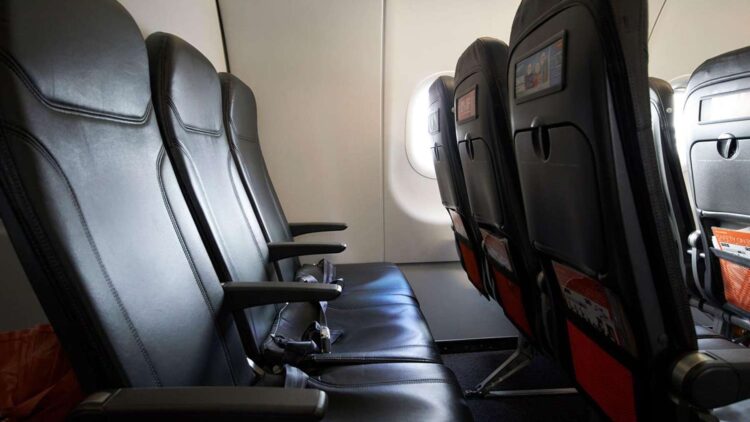
Today, flying is commonplace for most people, especially with the rise of low-cost airlines. These airlines allow travel at affordable prices for many, in exchange for certain restrictions, such as the clothes dryer randomly selecting a seat. On the other hand, some airlines do allow seat selection for the same price or for a slightly higher fee. Now, three passengers have filed class-action lawsuits against United Airlines and Delta Air Lines. The plaintiffs allege that the airlines charged extra for window seats, despite the lack of an outside view. United and Delta, for their part, argue that a window seat refers only to the seat’s position within the aircraft, not to the view outside.
Now both airlines face class-action lawsuits
The class-action lawsuits were filed in federal courts in New York and California. The case involves passengers who paid up to $169 extra expecting an outside view, only to discover upon boarding that their seat actually faced a wall. Specifically, this defense challenges the class-action lawsuits filed by plaintiffs Aviva Copaken and Marc Brenman against United, and by plaintiff Nicholas Meyer against Delta. Now both airlines face class-action lawsuits, and United’s defense is as curiously unusual as the lawsuit itself.
Many passengers choose to pay a little more for seat selection, though they may encounter the same issues as these passengers. In response to claims that they mislead customers, airlines state that the term “window seat” describes a seat’s location in the row, specifically its position against the outer wall of the aircraft, rather than promising amenities such as an outside view. In other words, there is no specific guarantee of an outside view. According to lawyers, “window” refers only to the seat’s position next to the aircraft’s fuselage.
The plaintiffs allege that the airlines violated state and federal consumer protection laws by marketing
What many passengers don’t know is that airplanes can be configured in different ways, and that depending on the aircraft type, the seats will have a specific layout. In fact, there’s a technical explanation: Boeing 737s (which make up more than half of United’s fleet) have at least one row without a window due to the location of electrical wiring and ducts. The plaintiffs allege that the airlines violated state and federal consumer protection laws by marketing and selling window seats to passengers at a premium price without informing them that some of these seats don’t have windows. In other words, it looks like this will be a real headache for the judges who hand down the ruling.
June 7, 2027, has been set as the date for the trial
The main problem arises when there’s a financial transaction involved, because if a customer pays for a seat that’s supposed to have a window, it’s understandable that they feel cheated when they board the plane and their seat isn’t by the window but by the wall. “Whatever the motivation for buying a window seat, if the plaintiffs and the members of the punitive group had known they were buying window seats without a window, they wouldn’t have selected them at all, much less paid more for them,” states United’s class-action lawsuit. And this doesn’t only happen with Boeing 737s; it also occurs with some Airbus A320s and Boeing 757s. While airlines like American, Alaska, and Ryanair notify passengers during the booking process if a seat lacks a window, United and Delta do not provide this information.
The fact is, as many users argue, the desire to choose a window seat often stems from medical or psychological reasons such as anxiety, claustrophobia, or motion sickness. In any case, June 7, 2027, has been set as the date for the trial, at which the plaintiffs will seek damages, legal fees, and a court order requiring airlines to change their practices to ensure passengers are informed and do not feel misled.