
Artificial intelligence has arrived like a technological tsunami in our lives: whether we were interested in it or not, it was going to appear everywhere. That’s why even our parents, who aren’t into technology and don’t care about technological advances, ended up talking to ChatGPT as if it were nothing special in their favorite messaging app: WhatsApp.
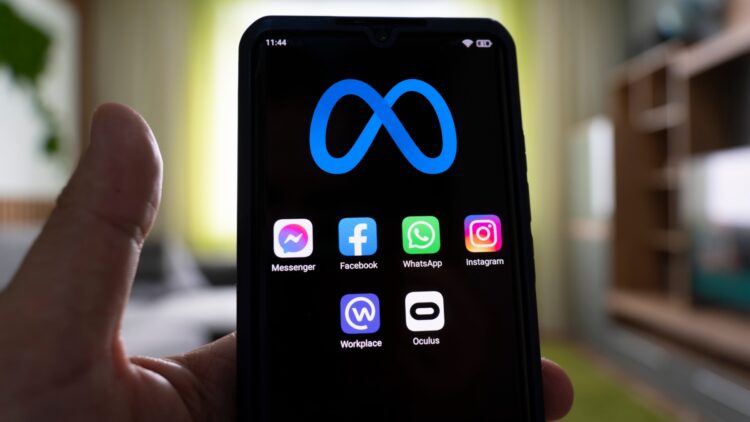
However, the days when your older relatives chat with ChatGPT to ask if their favorite restaurant is open or when their favorite soccer team’s next game is, are numbered. Meta, WhatsApp’s parent company, has set a deadline for all third-party general-purpose artificial intelligence chatbots. As of January 15, 2026, only Meta’s artificial intelligence will be allowed to be used.
How did ChatGPT end up on WhatsApp?
If the company that owns Facebook is so wary of its customers, how was it possible for an external service like ChatGPT to operate within WhatsApp? Although it had Meta’s consent, the company itself created an official one for its business customers: the WhatsApp Business API (WABA). This was not designed for the average user, but was used by large companies—such as banks and airlines—to connect their automated systems to WhatsApp. Its purpose was to enable smooth, large-scale communication with customers for technical support or customer service.
This is where artificial intelligence companies, such as OpenAI, knew how to take advantage of this loophole: like any other company, they registered and gained access to WABA, and acted as a legitimate business.
All of this works through a communication mechanism called a “webhook”: a user sends a message to the chat number on WhatsApp. WhatsApp forwards this message to an external server, which is the third-party webhook. The external server acts as an intermediary, instantly calling the OpenAI API to obtain a response generated by the model. The external server returned the responses through WABA, and these reached the user as a normal WhatsApp chat message.
While the API was intended to support customers in business transactions, artificial intelligence companies hijacked it to distribute a general conversational product.
The AI Race
The need to integrate artificial intelligence assistants into WhatsApp was a response to market pressures: they are following trends and fighting the fear of being left behind. In real life, few people urgently needed to use artificial intelligence, but it was something very new that captured the attention of the global population. A company of Meta’s caliber couldn’t afford to have its billions of users leave its apps to access the most popular technology of the moment. That’s why they implemented their own AI, Meta AI.
Another reason for jumping on the artificial intelligence bandwagon was simple marketing. By integrating artificial intelligence directly into such a common chat interface, Meta offered the average user their first experience with artificial intelligence. It’s the equivalent of first love—or your first line of cocaine—you’ll never forget it. This mass adoption strategy instantly increased the usefulness of WhatsApp: not only did it serve as instant messaging, but now users were using it much more often than other mobile apps.
Meta’s chess game
If the company had already agreed to the initial integration, why did it change its mind? Quite simply: it has now established its own assistant, Meta AI (based on the Llama model). By banning rival artificial intelligences such as GPT and CoPilot, it ensures that its own assistant is the only general-purpose one available on WhatsApp. It was one thing in the early months when any kind of artificial intelligence was all the rage; now they have their own assistant, and they are going to protect it jealously.