
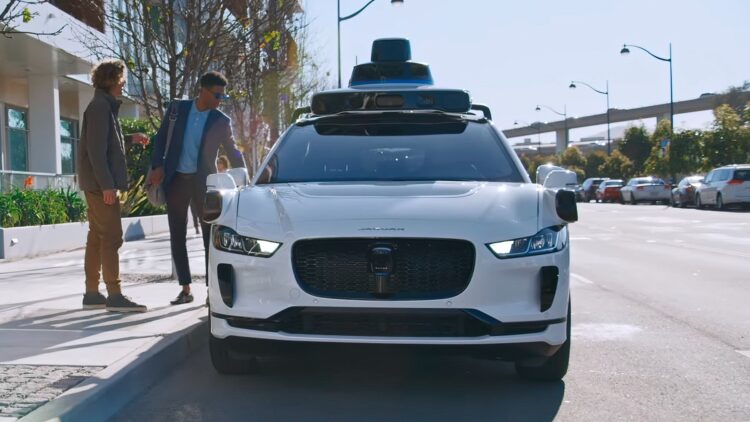
If you were fed up with Uber drivers who couldn’t hold a normal conversation or played loud radio stations, we have good news for you. Waymo has just announced that it will extend its line of self-driving taxis to four new cities in the United States.
Yes, we can consider it a belated Christmas gift if you’re one of those people with so much social anxiety that you want to take a taxi with no one behind the wheel—literally. You can now breathe easier knowing that Waymo has arrived in your city.
The robotaxi era
Waymo’s fledgling fleet of cars will soon arrive in Baltimore, Philadelphia, St. Louis, and Pittsburgh. Manual driving has already begun in each of these cities, and they are preparing for the next stage of public robotaxis. Although we may be a little nervous, Waymo has been conducting driverless tests for years. It has thousands of hours of driving experience under its belt, with the only passengers being volunteers and company employees.
All the data collected in the early stages has been used to refine its navigation algorithms. Every mile traveled under this supervision provides information about unusual traffic patterns, complex intersections—but totally real ones in American cities—and the behavior of local drivers. In other words, they have armed themselves with all the information necessary to know what it is like to drive on a real street (or highway) in the United States.
Until now, Waymo had been present in metropolitan areas such as Phoenix, Los Angeles, and the San Francisco Bay Area, where fully autonomous highway trips were already being offered. (Places where, coincidentally, the weather is always good and there are no adverse weather conditions that could interfere with the autonomous vehicle’s sensors.) However, each state and city is unique and requires regulatory approvals, technical validations, and a lot of paperwork before this ride-hailing service can even hit the streets. That’s why residents can rest assured that by the time they see these Waymo autonomous vehicles, they will have done a great job of mapping the streets, understanding local traffic behavior, and testing all the sensors on their roads.
Waymo on the road
As we told you when it was announced, on November 12, Waymo announced that its robo-taxis would be hitting the road for the first time. Until then, its cars had been confined to metropolitan areas. However, the company has now perfected its driverless vehicles to such an extent that it is confident they can be used on the highway.
For many people, Waymo has flown under the radar for a long time. Don’t worry, it’s not that you’re old or out of touch. It’s just that this company has focused on autonomous driving technology and, until now, has operated in very limited areas. It draws directly from Google’s pioneering Self-Driving Car Project (2009), but it broke away and established itself as an independent company in 2016, almost 10 years ago.
The technology of the Waymo robotaxis has reached level four, which means that the vehicle can operate without any human intervention within very specific geographical areas; it means that, although it can go on the road, you can’t ask it to take you from one coast of the United States to the other as if it were a human driver.
Robotaxis on the highway
We already feel quite apprehensive when we see Tesla taxis driving at 10 miles per hour through downtown Austin. We don’t even want to imagine what an autonomous taxi traveling at high speed on the highway might be like. However, these robotaxis comply with all safety regulations. We can be sure that they won’t go 150 miles per hour, even when the rest of the traffic around them exceeds that speed.
What do you think about robotaxis? Would you be willing to ride in a taxi with no one behind the wheel? Or are you like Will Smith in I, Robot? Tell us in the comments.