
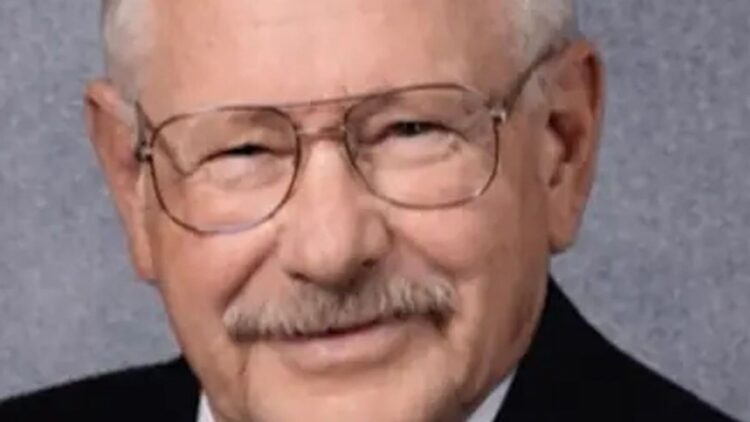
There is no doubt that science is advancing by leaps and bounds, allowing us to resolve doubts and answer questions that would otherwise have been impossible. Specifically, in Washington state, science has helped a family find closure after 20 years. A skeleton that washed ashore on a Washington state beach in 2006 was identified as that of a former mayor who, according to authorities, drowned during a fishing trip in Oregon. Advanced DNA analysis allowed authorities to close a case that seemed impossible.
Thanks to genetic analysis conducted in 2005, the remains found in 2006 have been identified
The news has been made public due to the magnitude of the investigation, which concluded with a DNA study. Nearly 20 years after the disappearance of Clarence Edwin Asher, Washington authorities have finally solved a case that seemed to have no answers. Thanks to genetic analysis conducted in 2005, the remains found in 2006 have been identified. This has brought answers to the family of the crab fisherman who vanished off the Pacific coast, thus solving one of the state’s oldest mysteries. It’s worth recalling that Clarence Edwin “Ed” Asher was presumed dead after disappearing during a fishing trip in Tillamook Bay, a small inlet on the Oregon coast.
To understand the details of this story, we have to go back to 2006, which seems like it wasn’t that long ago, but 20 years have passed. Specifically, on September 5, 2006, Clarence Edwin Asher, a 72-year-old crab fisherman and former mayor of Fossil, Oregon, was reported missing by his wife after failing to return from a fishing trip. From that moment, the Coast Guard launched an extensive search, which was suspended on September 6, 2006, just one day after Asher’s disappearance, according to local media reports. Despite the deployment of maritime and air teams by the U.S. Coast Guard, they only found his boat adrift in the bay, with baskets full of crabs still on board, but no sign of the fisherman. Although it was suspected to be an accident, at that time no evidence was found to close the case.
Office attempted to identify the remains but found no significant leads
Asher’s wife informed authorities that her husband couldn’t swim and wasn’t wearing a life jacket, leading them to conclude that Asher had drowned, as was reported at the time. In November 2006, skeletal remains were found on a beach in Taholah, an unincorporated village on the Quinault Indian Reservation, approximately 185 miles north of Tillamook Bay. The Grays Harbor County Sheriff’s Office and the Coroner’s Office attempted to identify the remains but found no significant leads. Asher was subsequently registered in the National Missing and Unidentified Persons System (NamUs) as John Doe of Grays Harbor County. It’s worth noting that in the United States, missing persons or those who choose to remain anonymous are referred to as John Doe, Jane Doe, or Baby Doe. Official records typically include a descriptive characteristic, usually the location of the disappearance, alongside the name.
The disappearance of Asher was a devastating blow to the community, as he had served as mayor and volunteered as a firefighter. He was a prominent figure in the community, making his death particularly poignant for residents. It wasn’t until 2025 that the cause of death could be confirmed and the case closed with conclusive evidence. In 2025, the forensic evidence was presented to Othram, a Texas-based genetic genealogy company specializing in missing persons cases. Othram’s scientists successfully extracted DNA from the remains and, using forensic-grade genome sequencing, created a complete genetic profile. Technology and science combined to corroborate that the remains found belonged to Clarence Edwin Asher. Science and technology came together to answer a question from 20 years ago.