
Taking out the trash is one of the thousand tiny household chores that pile up in our mind until the mental load finally overwhelms us. In a world of overabundance and consumerism, it’s almost a Sisyphus quest trying to tackle all our household waste. No matter how on top of it all you are, plastic packages and cardboard boxes pile up in a matter of hours. Even the most eco-friendly households can end up feeling defeated while trying to separate their trash correctly—whether the sentiment steams from a love for Mother Nature, or just trying to avoid a council fine for mixing recyclable materials with regular trash.
However, we need not desist. Instead, we bring you a list of things you should priorize disposing of correctly—so as not to contaminate your whole county by mistake, or incur into thousands of dollars in fines.
Car parts
Unlike other countries, the US has maintained the habit —or at least, the expectation—of doing our routine car maintenance at home. Everyone remembers those weekends when we were tasked as kids to point the lantern light’s correctly at whatever thing our father or grandpa was doing under the hood. Petrol head culture is still prevalent, and apart from saving some serious money changing our own oil or taking care of our cars battery, we are left with components that cannot be poured down the drain without polluting your county”s water system.
We are not being dramatic; oil from a single ooil change can contaminate 1 million gallons of fresh water—that’s enought to supply water for 50 people for a year.
Car batteries contain both lead and sulfuric acid, that cause permanent brain damage if leaked to the water system. Car batteries are so frail, in fact, that the cannot be stored anyway other than upright or they will leak.
The good thing is that most autoparts stores do collect both car oil and car batteries for free.
Non-traditional batteries
We are talking about batteries made out of lithium, ion, or just rechargable batteries. The main danger is that they are prone to catching fire. Well, not catching fire per se, but once they are crushed in any way (for example, when compacted in a regular garbage truck) they enter thermal runaway, that burn at over 1,000ºF. The problem is so prevalent that they have become the number 1 cause of fires at recycling centers and garbage trucks.
Unless you want to be fined for making a fire truck catch fire, take all your batteries to an electronic retailer, where they usually have a battery drop-off station right by the entrance.
Yard waste
“But it’s organic, why shouldn’t it go with the regular trash?” Good question. The problem is, regular trash get’s buried deep in a landfill, where it get’s little oxygen and doesn’t degrade. (Modern landfills are a “let’s have future generations deal with it instead” kind of waste management.) Since it cannot degrade, these grass and leaves clippings start releasing methane… a greenhouse gas that is nearly 30 times more potent than CO2.
Instead, try to decompose it the traditional way in your garden, or put it in the green bin for garden waste so that your municipal program can compost it for you.
Aluminum cans
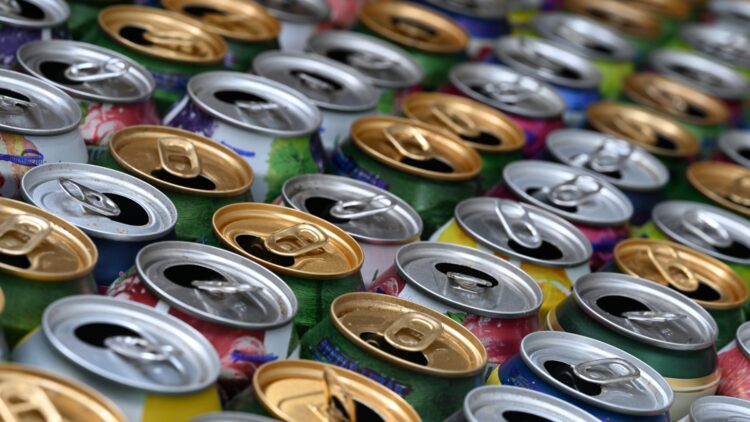
Aluminum cans are not extremely polluting like motor oil or rechargable batteries, so why do so many councils fine you if you throw them in the regular trash? Well, it’s not about pollution, but sutainability. Aluminum is in fact one of the only materials which is eternally recyclable; it can be washed, melted and reshaped till the end of time. In fact, most of the aluminum which was mined 200 years ago is still in circulation.
Most of aluminum’s carbon footprint comes from extracting it from Earth, which is way authorities and private companies are so adamant on recycling aluminum packaging—it’s virtually the only material that is profitable to recycle. Waste not, want not.
So next time you don’t feel like binning that can of soda in the right trash can, remember that creating a new can from recycled aluminum uses 95% less energy that mining enough mineral for a new one. And you would prefer if soda prices stayed low, right?