
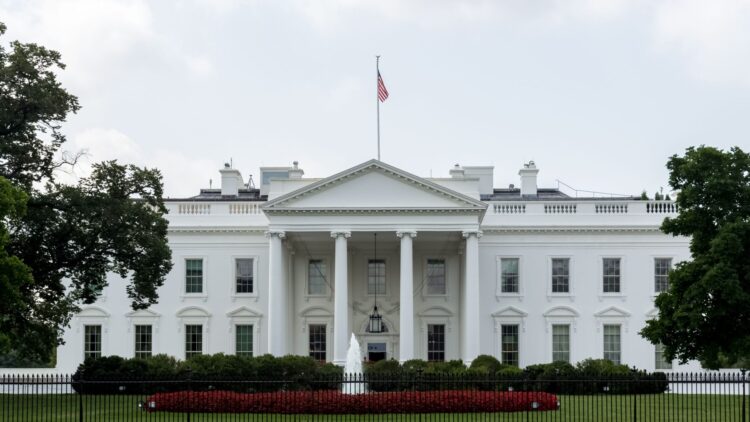
Last Sunday, Washington, D.C. dressed up for a special occasion. The red carpet at the Kennedy Center witnessed a meeting that many had been waiting for: President Donald Trump and Canadian Prime Minister Mark Carney appeared smiling, sharing the stage with cultural leaders (and, for some strange reason, Sylvester Stallone). Both presidents—not Mr. Stallone—had met privately hours earlier with Mexican President Claudia Sheinbaum.
Diplomacy seemed to be triumphing, at least at first glance, with Trump joking about how good Canadians are at ice hockey. However, when the press asked when trade negotiations would officially resume, Trump uttered an enigmatic “We will see.”
Despite the tuxedos, handshakes, and smiles, the aggressive trade war was still ongoing. Today, tariffs remain at 35%, and if a solid agreement is not reached soon, the cost of living for American and Canadian families could continue to rise even further by 2026.
Tariffs on Canadian goods
Until relatively recently, when we thought of tariffs, our minds wandered to faraway places and customs purchases from exotic countries.
Few people considered that tariffs would also be imposed on neighboring countries such as Mexico or Canada. However, everything changed on August 1, 2025, when President Trump signed an executive order that increased tariffs on Canadian products from 25% to 35%. All goods that were not explicitly protected by the free trade agreement were affected.
The atmosphere was tense, but that was nothing compared to what happened in October: the provincial government of Ontario launched a television ad in the United States, featuring audio clips of President Ronald Reagan warning about the dangers of tariffs. We don’t know who was behind the campaign, as the original intention of the ad was to appeal to Republican voters… But the effect was the opposite. Next, Trump considered the night a personal attack and canceled all trade talks in October. So far, both economies have remained in limbo without any renegotiation.
Who pays these tariffs?
Tariffs are often talked about as if they were a fine paid by the Canadian government. A tariff is an import tax. Who pays it? It is the US company that buys products to bring them into the United States. And as we all know, companies rarely absorb this extra cost… Instead, they pass it on to the end consumer: us.
And it’s not a small amount. In 2024, total trade in goods and services between the United States and Canada reached $909 billion.
In a globalized world, the economy is totally interconnected in one way or another. A car assembled in Detroit may well contain Canadian steel and parts that have crossed the border. If we apply a 35% tariff to these components, we end up inflating the price, creating inefficiency and higher prices throughout the supply chain.
Another sector that has been significantly affected is housing; the United States is one of the largest importers of Canadian wood for house construction. The increase in material costs has only served to drive up the price of housing in an already difficult real estate market.
But the United States is not the only country whose population is suffering from these tariffs. Economists estimate that this trade dispute could reduce Canada’s gross domestic product by between 1.5% and 4%. If this continues, between 490,000 and 700,000 jobs could be lost in Canada.
Now President Donald Trump is using the 35% tariff as leverage. His goal is to obtain concessions before July 2026, when the CUSMA free trade agreement will undergo a mandatory review.
FAQs
Which goods will go up in price due to tariffs?
Consumers should keep a close eye on the cost of cars—due to Canadian steel and aluminum—and the cost of home construction or renovation (due to Canadian lumber imports). Some processed foods and consumer goods from our northern neighbor also depend on supply chains and could see price increases if the 35% tariff remains in place.
Will this affect my vacations or travel?
There are no tariffs on travel, but there are economic effects. For an American, traveling to Canada will be cheaper because the Canadian dollar has fallen. However, for Canadians, traveling south will be much more expensive… Which explains why tourism from our neighbors has fallen by 33%.