
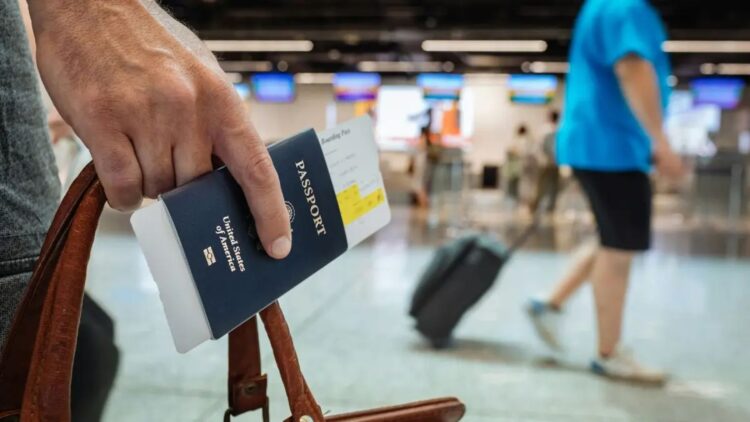
The situation in the Americas has led to the activation of certain security measures and recommendations for travel to some countries. Specifically, the U.S. Federal Aviation Administration (FAA) has asked commercial airlines to exercise extreme caution when flying over parts of Latin America due to “military activity.” Jamaica joins Antarctica, Mexico, France, Brazil, Italy, the Bahamas, Turkey, and other countries following this new travel alert issued by the United States. The agency issued several notices—known as NOTAMs—warning of potential risks in the airspace of some countries south of the United States.
Mexico, Central America, and parts of northern South America, including Panama, Colombia, Ecuador and Venezuela
The fact is that, in response to rising security risks, political tensions, and new entry regulations, travel advisories have been extended to U.S. citizens. Broadly speaking, the countries for which these advisories have been issued include Mexico, Central America, and parts of northern South America, including Panama, Colombia, Ecuador and Venezuela. Given the growing concern for global security, these warnings reflect the increasing need for caution when traveling to regions affected by rising crime, terrorist threats, and changes in border policies—a situation that extends across the continent.
In response to escalating security risks, political tensions, and new entry regulations, the U.S. government considers these recommendations essential
In any case, this new wave of travel advisories doesn’t only include countries in the Americas. The recommendations extend to destinations such as Jamaica, Antarctica, Mexico, France, Brazil, Italy, the Bahamas, and Turkey, among others. U.S. citizens are urged to stay informed about the risks in these countries and take appropriate precautions before planning their trips. In response to escalating security risks, political tensions, and new entry regulations, the U.S. government considers these recommendations essential. It’s worth noting that these advisories will remain in effect from this week until March 17, according to local media reports.
“These revisions are necessary to mitigate the potential for midair collisions” – The Federal Aviation Administration (FAA)
In this regard, the Federal Aviation Administration (FAA) recently announced that most helicopters would be prohibited from flying near Ronald Reagan Washington National Airport, according to a provisional rule issued Thursday, a week before the anniversary of the midair collision that killed 67 people. “These revisions are necessary to mitigate the potential for midair collisions,” the agency stated in the rule. The so-called “final interim rule” makes permanent the restrictions imposed after the accident involving a U.S. Army helicopter and an American Airlines Group Inc. regional jet. As we can see, these air travel restrictions reflect the country’s current situation regarding its international relations.
“We determine the probable causes of the accidents and events we investigate and issue safety recommendations aimed at preventing future occurrences ” – The National Transportation Safety Board
Many of the standards follow the recommendation of the National Transportation Safety Board, which is an independent federal agency charged by Congress with investigating every civil aviation accident in the United States and significant events in the other modes of transportation—railroad, transit, highway, marine, pipeline, and commercial space. According to how they are defined on their website: “We determine the probable causes of the accidents and events we investigate and issue safety recommendations aimed at preventing future occurrences.”
The NOTAM also warns of potentially hazardous conditions over the Pacific Ocean and the Gulf of California
Ultimately, it’s more important to stay informed about the security situation and the new travel requirements for each of these destinations to avoid last-minute surprises. Incidentally, the NOTAM also warns of potentially hazardous conditions over the Pacific Ocean and the Gulf of California. While the FAA hasn’t specified the exact source of the military activity that prompted the warning, it urges travelers to follow the recommendations.