
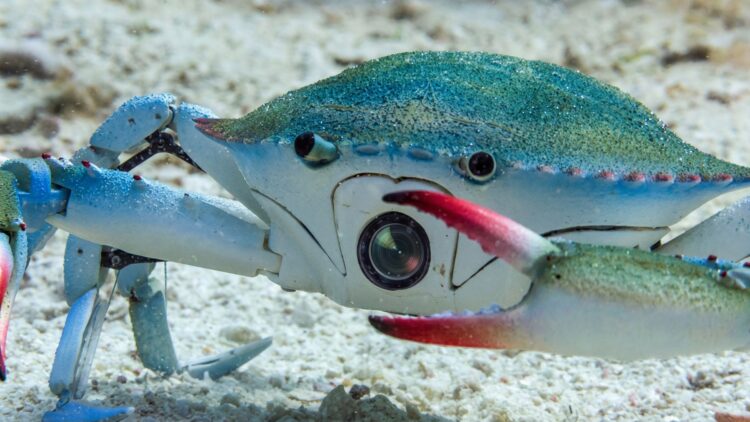
Oh, to be a fly on the wall… How many times have we wished to be an inconspicuous witness to some juice drama? Biologists feel the same. Just like you don’t behave the same when you know you are potentially being watched (hello, Panopticon world), researchers know deep down that animals become wary if they notice some intruder in their habitat.
While nature documentaries have gone far and beyond to give space to animals and film them from a secure and non-intrusive way—they are the flora & fauna paparazzi, after all—there is an innovative way if filming, that goes exactly in the opposite direction. Beccause why would you want to hide a camera, when you can create an animatronic robot that camouflages itself as one of the very animals you are trying to film?
Spy in the Ocean is an engaging four-part show from Nature that drops the audience right into the mysterious deep blue sea. John Downer Productions created the series, which is famous for using clever, waterproof robot cameras designed to uncover the private lives of marine animals. These robotic spies act as a new wave of deep-sea explorers, quietly blending into the underwater world to meet and watch the different creatures living there. Just like a KGB mole during the Cold War, these robots blend themselves among the colony to spy and report back to air-breathing humans.
Uncovering the Secrets of the Deep
Every chapter of Spy in the Ocean gives a fresh look at sea life. If you thought Mexican telenovelas were full of drama, you have yet to see this mini-series. The show features all kinds of animals, including a baby whale—which is the biggest robot spy they’ve ever made—along with sea iguanas fighting through bad weather and the incredible mantis shrimp.
By mixing a documentary style with the newest tech, the series puts the audience right in front of these animals in their own homes. We finally get to take a really close us peek at sea floor fauna that tends to be camera shy.
The show first aired on PBS on October 25, 2023, and has earned praise for its creative take on nature filming.
How did they come up with such an idea?
Matthew Gordon explained that their journey into this specific type of wildlife filming had started more than 20 years earlier with a project called “Lions Spider Den.” The plan back then was basic—it was just a camera hidden inside a fake rock to film from a closer distance a pack of lions
They attached the camera to a buggy that could drive over the rough ground, which allowed them to get amazing, close-up shots. This experience sparked the idea of using the same method for other animals.
The Evolution of Spy Technology
Gordon and his team then broadened their scope to include elephants, tigers, and other creatures. He mentioned that they started building different kinds of hidden cameras, such as the “dome cam” and “tree cam.” The sky—and their robotic ability—was the limit.
About a decade ago, they took a major step forward by introducing realistic robot cameras that looked exactly like the animals they were watching. He pointed out that this invention first appeared in Penguins – Spy In the Huddle, where they used a robot penguin with a lens hidden in its eye. The idea was not only popular with viewers (audience ratings showed so!) but also became a real passion for the team.
Making Jacques Cousteau proud
This success had led to the creation of the Spy in the Wild series, which featured more than 30 different robot creatures like orangutans, egrets, and even flying drone animals and birds. He added that their exploration had continued into every part of the animal kingdom. Most recently, in their latest series focusing on the oceans, they had ventured into the marine world.
They were experimenting with ocean spy creatures to find new sides of aquatic life. He concluded that the journey had been a thrilling exploration of wildlife filming techniques, constantly pushing the limits of how they observe and understand nature.
To watch Spy on Camera, you can purchase individual episodes or the full season on Apple TV, Amazon Prime Video, and Google Play.