
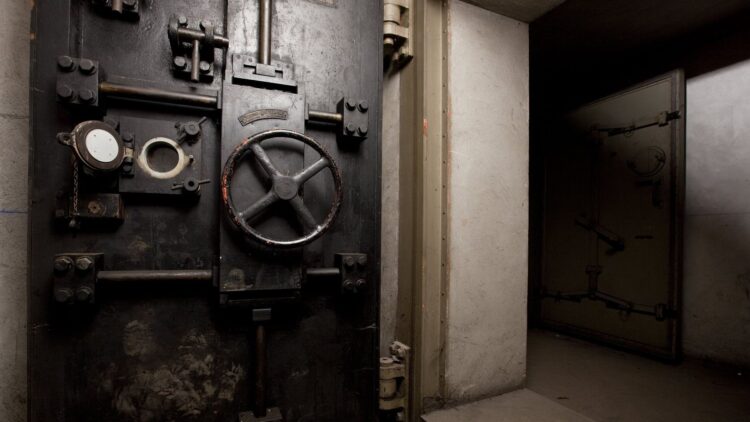
In the last few years, the idea of owning a bunker doesn’t seem so crazy. Since Russia invaded Ukraine in 2022 and European authorities warned that a large-scale conflict in Europe cannot be ruled out, many families have started to think about how to protect themselves against such a serious emergency.
In Spain, private bunker demand has increased about 20% since 2022, according to industry figures and media reports, but the main question is whether these bunkers really protect in case of a nuclear or chemical emergency. So, let’s find out.
Bunkers popularity
The European Union has recommended people to prepare emergency kits to be able to be self-efficient for at least 72 hours in case of a disaster or attack. These kits must include water, food, medicine, flashlight, radios, and important documents.
In Spain, many people consider this basic kit as the first step. According to what media and government sources estimate, there are about 400 private bunkers in the country, but only four public bunkers designed to resist a nuclear attack, most of them located in Madrid. This places Spain behind countries like Germany and France, where civil defense systems and shelter networks are more developed.
How can a bunker really protect you?
Some people think their basement could be used as a bunker, but it can’t. Experts explain that a bunker must meet certain technical requirements to provide real protection.
First, the location is really important. A bunker should ideally be built away from obvious strategic targets or heavy industrial areas. The ground must also be examined for stability, drainage, and soil pressure to ensure the structure can withstand blast waves and shifting earth.
What’s more, they say that for nuclear protection, the shelter should:
- Be at least ten meters underground.
- Have reinforced concrete walls.
- Have a fully sealed structure.
- Have steel cladding in anti-nuclear designs.
Could anyone afford this level of protection? In Spain, the average price of a private bunker is reported to be around €150,000. Luxury constructions by companies such as Búnker VIP can exceed €350,000. It’s true that simpler adaptations of basements or rural buildings cost less, but they offer more basic levels of comfort and protection.
Air, water, and food underground
Once the structure is built, the next thing to take into account is to be able to survive inside. For example, modern bunkers include mechanical ventilation systems with high-grade filters to block nuclear fallout dust, chemical agents, and biological particles. These systems are designed to keep air breathable even if the outside environment becomes contaminated. Backup options are often included in case of power failure.
Then, water and food supplies determine how long occupants can remain inside. Spanish civil protection guidance recommends storing enough drinking water and non-perishable food for at least two weeks. This period corresponds to the time when radiation levels outside are likely to be highest after a nuclear event.
Also, medical supplies are also critical. Preparedness guidelines mention essential medicines, first aid materials, hygiene products, and, in nuclear cases, iodine tablets that authorities may distribute to protect the thyroid. Even everyday items like toilet paper become essential when leaving the shelter is not possible.
Power, communication, and emotional stability
In an emergency, information is key. This is why many bunkers include radios that work with batteries or a crank, so that occupants can receive official instructions if mobile networks fail.
Electricity is also essential to make ventilation systems, water pumps, and lighting work. For this reason, many bunkers are equipped with generators, fuel storage, solar panels, and battery systems. These features ensure that air circulation and basic lighting continue even if the public power grid collapses.
Comfort is not just a luxury; it supports mental well-being. Global companies such as Vivos Survival Shelters market high-end underground complexes designed like apartments for longer stays. Even in simpler shelters, basic comfort features can help reduce stress during confinement.
Public bunkers and real options
Now, Spain has only four public bunkers to protect people from nuclear attacks: Palacio de La Moncloa, the Torrejón de Ardoz Air Base, the bunker in El Capricho park in Madrid, and the underground shelter beneath Hotel Ébora. Some metro tunnels could also provide some protection, although they would be still exposed to radiation.
So…
Because private bunkers are expensive, they remain out of reach for most households. For this reason, preparedness experts recommend practical steps that anyone can take, such as assembling a three-day emergency kit, understanding local alert systems, and discussing emergency plans within the family.