
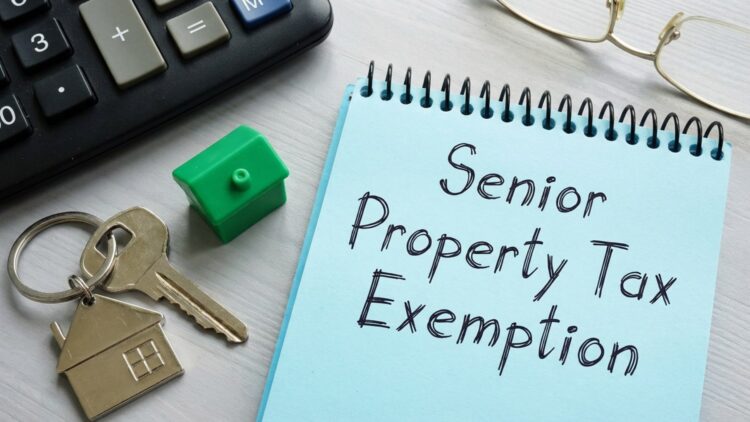
Property tax pressure is one of the greatest threats to the financial stability of any citizen with a fixed income. Residents over the age of 65 are one of the groups most vulnerable to this tax increase. For a person with a fixed pension, the constant increase in taxes payable can mean losing the home they have worked so hard to build over decades. Fortunately, New York State has recently enacted legislation that attempts to alleviate this burden.
This new law focuses on increasing the tax exemptions available to low-income senior homeowners. This will allow senior citizens to age in place with dignity.
Senior Citizen Homeowners’ Exemption (SCHE)
This exemption is New York State’s primary tax relief mechanism for senior citizens. It is regulated by NY Real Property Tax Law (RPTL) Section 467. The SCHE does not reduce the tax rate on your property, but rather reduces the assessed value of the home, which is the figure on which the tax is calculated. When the assessed value is reduced, the final tax payable is significantly lower.
Three requirements must be met to qualify for the SCHE exemption:
- One of the owners must be 65 years of age or older;
- the property in question must be your legal primary residence; and
- you must have limited income (the threshold is set by your local government).
Historically, the maximum extension that a locality could offer its most needy senior residents was 50%. With the new legislation—formally known as S5175A/A3698A—the ceiling on the maximum extension available to low-income seniors rises from 50% to 65% of the assessed value of their home.
This 15% increase is specifically designed to help those with lower incomes who are among the most vulnerable. It is estimated that this change could translate into up to $300 in additional annual savings for the average senior citizen.
However, there is a catch: the new 65% extension is not automatic or a state mandate, but rather authorizes municipalities to adopt the increase. In other words, each local government must vote and pass its own legislation to opt for the 65% benefit. Income limits are still determined at the local level, but the law allows seniors with lower incomes within the shadow to receive the higher extension… if their municipality so chooses.
The maximum income limit to qualify for any SCH exemption remains around $58,400 in many areas, but the 65% extension will benefit those with much lower incomes.
Other Tax Relief Programs
SCHE is not the only assistance program for senior citizens. There are multiple tax exemption programs that help significantly reduce household expenses:
- Enhanced STAR is an exemption that applies specifically to school taxes. This benefit is available to homeowners aged 65 and older with a higher income limit—around $97,000. It can be combined with SCHE.
- There is also the Long-Term Resident Exemption (SCLRE), governed by RPTL §467-k. This exemption protects homeowners who have lived in the same home for 25 years—or more—from value increases due to gentrification or real estate market appreciation in their area.
- The Property Tax Deferral Program (PT AID) is a safety net. It allows senior citizens with incomes up to $107,300 to defer their property tax payments.
While this new legislation is welcome, it is best to contact your local assessor’s office to confirm whether your locality has adopted the new 65% rate. This will be provided on Form RP-467 (SCHE application) and will confirm the filing deadline.
FAQs
What is the new law S5175A/A3698A?
The SCHE is a property tax exemption that reduces the assessed value of the home for low-income seniors. Law S5175A/A3698A allows municipalities to increase the maximum discount on the assessed value from 50% to 65%.
What is the income limit to qualify?
The limit is set by your city or county. For the smallest exemption (5%), the combined annual income cannot exceed $58,400. You should consult your local assessor for the exact threshold for the 65% exemption, which will be more stringent.