
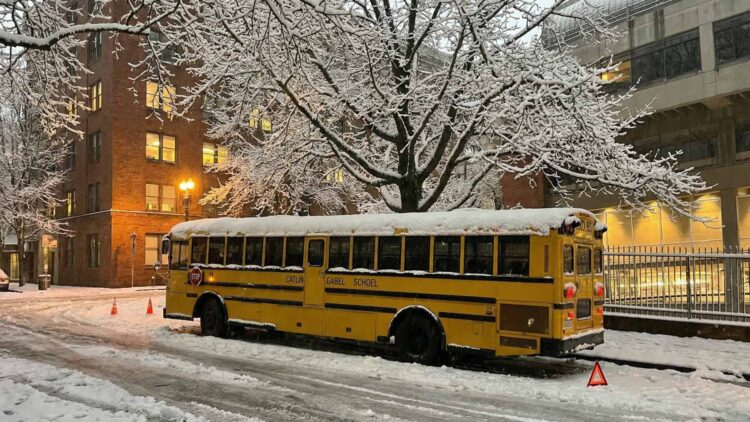
Winter solstice will soon be upon us in the United States. Extreme weather conditions will become more frequent, so we need to pay close attention to the daily weather reports. Although it is rare, school closures due to extreme cold and snow are possible in this southern state. In addition to cold weather and very low temperatures, other factors must also be taken into account that could lead to school closures in the state of Texas.
When are classes canceled in Texas?
The reality is that there is no minimum temperature that requires state schools to close. Each district analyzes its own weather conditions and the state of its roads. If they see that it will be very difficult to pick up all the children, school is simply canceled. This is why, before canceling a school day, the weather, road conditions, and the proper functioning of school transportation are taken into account.
For example, some days classes have been suspended when temperatures have been close to or below 14°F, while closures are actually more likely to occur when temperatures are around -4°F, a range that greatly increases the possibility of freezing.
The Cleburne School District, which operates 12 schools about 33 miles from Fort Worth, adds a few extra minutes to its daily classes. This serves as a “buffer”: if they have to close due to bad weather, they don’t have to make up those days later.
Since they know that canceling classes complicates families’ routines, they try to assess the situation ahead of time. Therefore, before making a final decision, they analyze several factors such as weather reports and news about road conditions, whether ice or snow has accumulated, the availability of electricity and heating in school buildings, and parking and sidewalk conditions.
In conclusion, if it would be an ordeal for children and parents to get to school, and the well-being of the children cannot be ensured during the day due to inclement weather, the school board decides to cancel the class day.
Another way to ensure that everything is okay is for building maintenance staff to walk around the entire perimeter. If outdoor areas can be traversed without risk, or internal routines can be modified without suspending classes.
If there has been heavy ice and snow overnight, students may be required to stay inside buildings during breaks when the temperature drops below 39°F. Although it would be nice to have recess with a snowball fight, districts prefer to be cautious and prevent children from getting hypothermia.
Austin, marching to its own beat
The Austin School District operates differently (to put it bluntly, they do their own thing): they are always monitoring the situation and in contact with regional authorities. As the weather in central Texas changes very quickly, they have to check the data constantly. To make decisions, the district consults with emergency experts, meteorologists, and the police. If bad weather is forecast, they activate their plan to see if it is necessary to change the schedule or cancel classes.
They also review Transportation and Emergency Management reports to find out if the roads are safe and what alerts are in effect in the area. This is done based on current weather conditions and forecasts for the early morning hours, just when students and employees are traveling to school.
How to know if the school day has been canceled?
Don’t worry, the days of waiting for your children’s school to be mentioned on a long list on the radio or television are over. Nowadays, most parents can expect an automated call with a recorded message from the superintendent or principal. If not, there are also text messages and emails. If the school uses a phone app, you will probably receive a notification on your cell phone.
That’s why we advise you to have your mobile notifications turned on, at least from the moment you wake up in the morning. You wouldn’t want to have to navigate an icy road with your child shivering in the back seat of the car… only to arrive and find out that school is closed!