
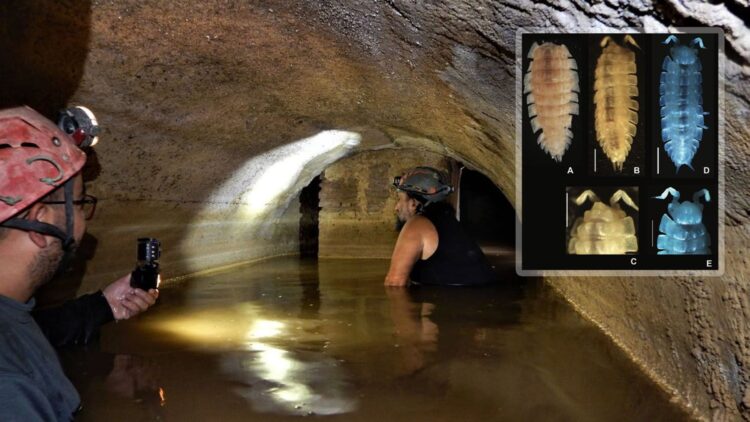
Sometimes we think we know everything on our planet, but researchers have found a new animal species in Spain. This animal has spent more than 2,000 years in an ancient Roman mine. So, this shows that there are many secrets under our feet and nature can hide in unexpected places. Ready to find more secrets?
Spanish Roman mine
Under the town of Carmona, located in the southeast of Spain, near Seville, there is a Roman mine known as the San Antón water mine. It’s true that this mine is very ancient, but it was used until very recently to provide water to citizens of the town, orchards, and other water systems. What’s more, the mine still has a permanent stream of water, which allows living organisms to survive inside it.
Between 2021 and 2022, a team of scientists and members of the Andalusian Association of Underground Exploration (Julio Cifuentes, Enrique Peña Pérez, and Álvaro Luna) decided to enter this mine to study its ecosystem. For this, the walking galleries flooded with water reaching their knees, and they had to use flashlights to see where they were going.
Finding the new animal species
During the exploration, researchers found rotting pieces of wood inside the galleries, and on the wood they saw small animals moving. At first, they didn’t know the importance of what they were looking at.
They were curious about it and they collected these tiny animals to study them in more detail. After analyzing them, scientists saw that they didn’t belong to any known species, so they had found a completely new species for science!
The finding was later published on May 15 in the scientific magazine Subterranean Biology.
Baeticoniscus carmonaensis
The new animal species was named Baeticoniscus carmonaensis, also known as Carmona isopod to honor the place where it was found.
Isopods are a very large group of invertebrate animals and we can find very known species such as pill bugs and woodlice. Although it may not seem like it, isopods are part of the larger group of crustaceans, which also includes animals like crabs, lobsters, and shrimp.
The Carmona isopod is extremely small, it measures just 0.1inches in length. It has a segmented body, antennae, and large black eyes, which helped scientists identify it as a new species. It’s almost colorless, which is very common among species living with no light.
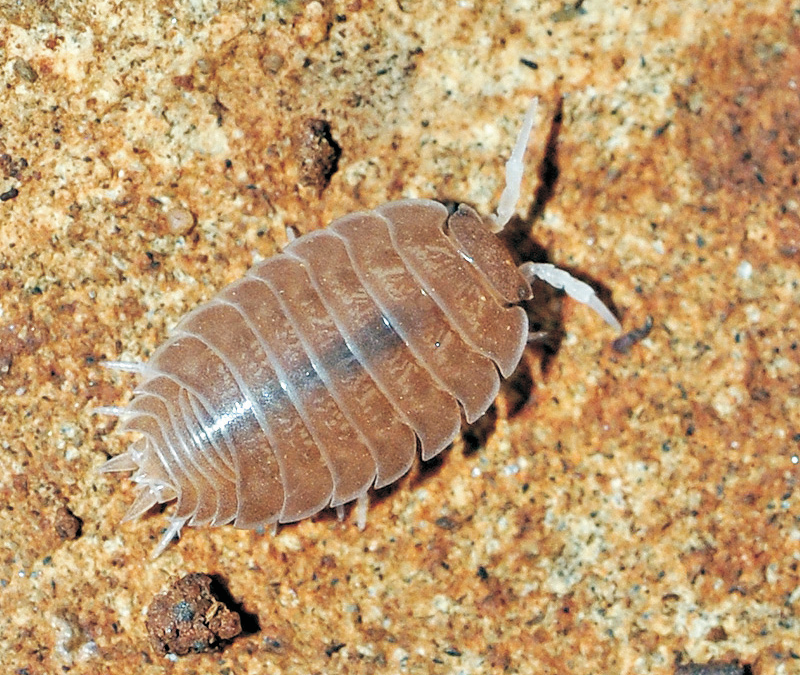
The animal species was identified based on its physical features, like eyes, body texture, and general shape. Scientists didn’t analyze its DNA because they just focused on morphological observation.
Where it lived and behavior
Researchers saw that these isopods were found in high zones inside the gallery systems, almost always on top of inside the rotten wood. According to the study, this wood probably fell into the mine from wells connected to the underground tunnels.
The thing is that these animals moved very actively and hid indeed the cracks of the rotten wood, using it as a shelter. They do this to protect themselves and find food inside the underwater environment.
Rare finding in the urban area
According to scientists, this finding is particularly important because there are just a few cases in the entire world where a new species has been described in a subterranean archaeological site. Finding a new species in an underground environment located within a town makes this case even more unusual.
Researchers explained that discovering a new species in an underwater area inside a town can help people pay more attention to those forgotten ecosystems, especially in places like tunnels, canals, and archaeological structures.
So, the next time you think everything has already been discovered, remember that sometimes, the most surprising life forms are quietly waiting right beneath our feet.