
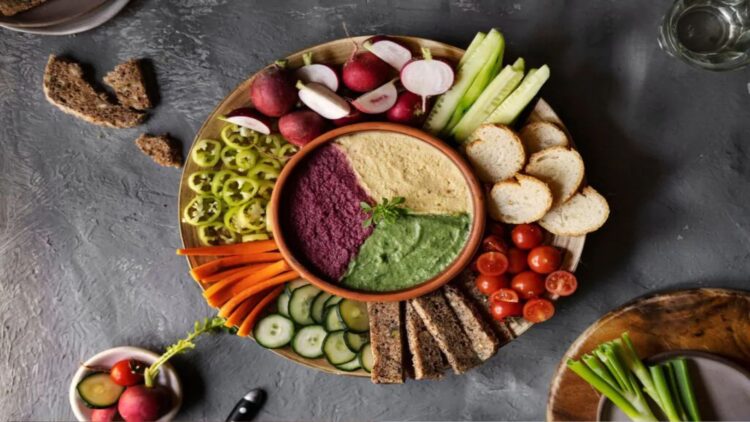
Raw veganism is a movement that emerged from the intersection of veganism and vegetarianism. According to the Dictionary of the Spanish Language (DLE), raw foodism is a “dietary regimen based primarily on the consumption of raw and unprocessed products.” It is a trend in which the diet consists mainly of raw food; no animals or animal products are consumed, nor is anything cooked. This trend has found a particular following in Hollywood and among content creators.
It’s not only based on non-animal foods but these foods must also be consumed raw
This trend, also known as raw food, aims to maximize the essential nutrients in food by consuming it in its natural state or with minimal processing. It’s a highly controversial diet that certainly has its advantages and disadvantages. It’s not only based on non-animal foods—meaning no meat, fish, eggs, dairy, honey, etc.—but these foods must also be consumed raw, without any cooking or processing whatsoever.
Those who follow this diet consume between 60% and 100% raw foods
Everything that makes up a vegan diet, but with a different preparation: instead of cooking them, the seeds are soaked in water, causing their starch and proteins to break down into short, digestible fragments that, after a few days, make them suitable for consumption. Those who follow this diet consume between 60% and 100% raw foods, always avoiding cooking above 45-47°C. The main objective is to preserve enzymes, vitamins, and antioxidants that tend to degrade at high temperatures.
According to experts, when we cook food, some of the micronutrients it contains are destroyed
Therefore, a raw food diet prioritizes natural and organic ingredients; with fruits and vegetables, especially leafy greens; nuts and sprouted seeds; sprouted legumes and shoots; seaweed… According to experts, when we cook food, some of the micronutrients it contains are destroyed, but when eaten raw, vitamins, minerals, antioxidants, plant proteins, and fiber are preserved.
Many opt for raw veganism, that is 100% plant-based options
As we explained earlier, to transform food without using fire, methods such as germination, artisanal fermentation, or sun drying are employed, linking this practice to ethical and ecological lifestyles. Although many opt for raw veganism (100% plant-based options), raw foodism also allows the incorporation of animal products such as raw eggs, unpasteurized dairy (kefir or raw yogurt), honey, raw fish (such as ceviche or sashimi), and steak tartare.
Experts discuss the importance of this diet for strengthening the heart
In any case, science also suggests continuing to cook proteins and certain vegetables (such as tomatoes or carrots), as this process facilitates the absorption of nutrients like lycopene and ensures food safety. Experts discuss the importance of this diet for strengthening the heart. By focusing primarily on fruits and vegetables, blood pressure decreases, and there is a lower risk of heart disease and stroke.
Since animal products are not consumed, a vitamin B12 deficiency is common
The influence of including nuts, seeds, sprouted whole grains, and legumes is also discussed, as they improve blood cholesterol levels. On the other hand, as with a vegan diet, the body does not receive the high-quality protein provided by animal products. Since animal products are not consumed, a vitamin B12 deficiency is common. Therefore, people who follow both this type of diet and a vegan diet must take supplements to maintain their body’s nutritional and energy requirements.