
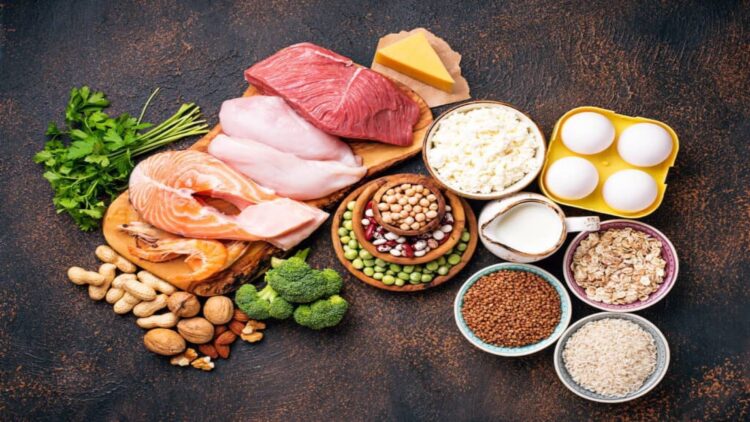
Nutrition is a cornerstone of human life, and in many cases, misinformation leads to a family’s or individual’s daily diet not including all the necessary nutrients for the body to function properly. For example, some diets make a key mistake: eliminating protein or reducing it to a minimum. The potential benefits associated with protein intake include increased satiety, greater thermogenesis, and the maintenance or increase of lean muscle mass. The fact is that this macronutrient is essential for many reasons, but especially for those who train at a high level or regularly.
Proteins generally increase satiety to a greater extent than carbohydrates or fats
Protein is necessary for cell repair, muscle and bone development, and many other vital functions. Experts point to increased satiety because, as explained in a study published in the National Library of Medicine, “proteins generally increase satiety to a greater extent than carbohydrates or fats and can facilitate a reduction in energy intake under dietary conditions.” They also contribute to increased thermogenesis. “High-protein diets are associated with increased thermogenesis, which also influences satiety and increases energy expenditure (in the long term, increased thermogenesis contributes to the relatively low energy efficiency of proteins),” the experts explain.
According to nutrition experts, all meals can include protein sources and shouldn’t be limited to chicken or turkey
On the other hand, there’s the maintenance or increase of lean muscle mass. According to the scientific publication, “in some people, a moderately high-protein diet can have a stimulating effect on muscle protein anabolism, promoting the retention of lean muscle mass and improving the metabolic profile.” And, according to nutrition experts, all meals can include protein sources and shouldn’t be limited to chicken or turkey. Breakfast can include eggs, Greek yogurt, or smoothies, as well as other alternatives that can be discussed with an expert.
Everyone is different and has a unique digestive system
It’s also important to know that any potential benefits associated with a moderately high protein intake should be evaluated in light of usual dietary practices and individual variability. Everyone is different and has a unique digestive system, so if you want to make dietary changes or try other types of diets, it’s advisable to consult a doctor or nutrition expert.
At lunch and dinner, it’s best to incorporate lean meats, fish, legumes, tofu…
The fact is that protein plays a key role in regulating food intake through satiety related to diet-induced thermogenesis, as explained above. Hence the importance of including it in every meal we eat throughout the day. At lunch and dinner, it’s best to incorporate lean meats, fish, legumes, tofu, tempeh, or quinoa. Between meals, nuts, seeds, protein bars, and hard-boiled eggs are recommended.
Experts recommend a varied diet, combining animal protein sources, or so-called complete proteins
In short, what we know from experts is that protein is more satiating than carbohydrates and fats in the short term, over 24 hours, and in the long term. Therefore, experts recommend a varied diet, combining animal protein sources, or so-called complete proteins, with plant protein sources. This combination can provide the full range of essential amino acids our bodies need. Furthermore, in the short term, “fast” proteins are more satiating than “slow” proteins, and animal protein induces higher thermogenesis than plant protein.
Additional protein intake results in significantly less body weight regain after weight loss
Therefore, “additional protein intake results in significantly less body weight regain after weight loss, due to body composition, satiety, thermogenesis and energy inefficiency, while the metabolic profile improves,” according to the study ‘The importance of protein in food intake and body weight regulation’ published in the National Library of Medicine.