
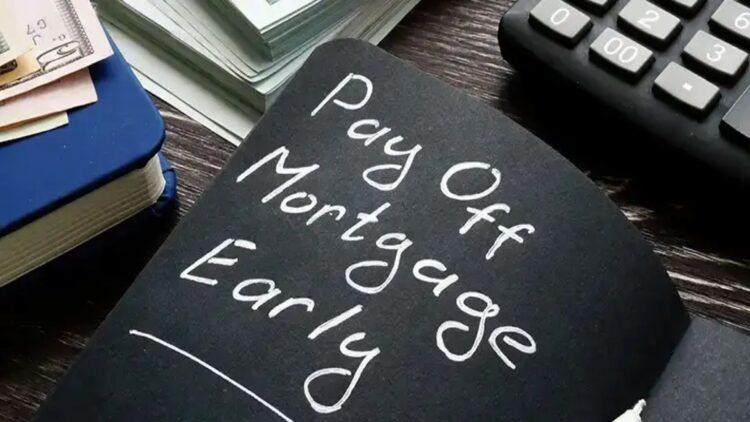
Paying off your mortgage early might seem like a good idea, but it also involves financial risks that must be considered. Having the opportunity to buy a home is becoming increasingly rare, but if you are able to, there are certain things you need to be clear about. If you bought your main residence before 2013, you probably qualify for the home purchase tax deduction on your income tax return. This tax benefit allows you to reduce your tax bill each year thanks to early mortgage payments. On the other hand, paying off your mortgage early offers peace of mind and reduces the total amount of interest, but it also has disadvantages that depend on each homeowner’s personal circumstances. These circumstances must be taken into account.
Many taxpayers consider paying off their mortgage early to save on interest
The fact is that, in economic terms, the stock market has offered an average annual return of around 10% in the long term, according to the S&P 500 index. Therefore, many taxpayers consider paying off their mortgage early to save on interest. While this decision reduces future payments, in the later years of the loan, the outstanding interest is usually minimal, since most of the payments go toward repaying the principal. However, if the mortgage interest rate is lower than the percentage mentioned above, allocating extra money to pay it off could mean forgoing potentially higher returns by investing those funds.
On the one hand, it’s important to keep in mind that most banks charge a prepayment penalty, usually around 1% of the outstanding balance, unless otherwise agreed. On the other hand, experts recommend considering at least four scenarios where sticking to the original payment plan might be more advantageous; one of these is the potential loss of investment returns. Furthermore, if the loan is prepaid, the payments that qualify for the annual income tax deduction (up to a maximum of €9,040 per taxpayer), according to official data, will cease.
Many taxpayers consider paying off their mortgage early to save on interest
This is important because each country operates differently. In the United States, for example, mortgage interest can be tax-deductible for those who itemize deductions. Therefore, by eliminating that debt, you could lose several years of tax benefits, as well as that deduction, which in some cases can translate into higher taxable income and, consequently, a higher annual tax burden. In most cases, when only a few years remain on the mortgage, the tax savings from keeping the loan outweigh the interest savings you would achieve by paying it off.
Making extra payments reduces the cash available for emergencies
Users should know that there are alternatives if they want to pay off their debt ahead of schedule while avoiding losing as much money as possible. Instead of paying off the mortgage entirely, a more cost-effective strategy is often to increase the annual loan payment until it reaches the maximum deduction allowed. Liquidity is another key factor. Making extra payments reduces the cash available for emergencies. By extending the loan term, you can maximize the mortgage interest deduction without unnecessarily sacrificing liquidity. Regarding liquidity, if an unexpected expense arises and the money has already been allocated to the mortgage, the borrower might be forced to sell investments or take out a personal loan, which typically involves higher interest rates.
In other words, it’s important to understand the context, the country’s economic situation, and the financial circumstances of the family or individual interested. Furthermore, some loans include penalties for early repayment. Another advantage of not paying off the loan all at once is the possibility of investing the available money in financial products that generate returns. So, although it may seem tedious, the best course of action for personal financial interests is to understand all the intricacies of banking transactions.