
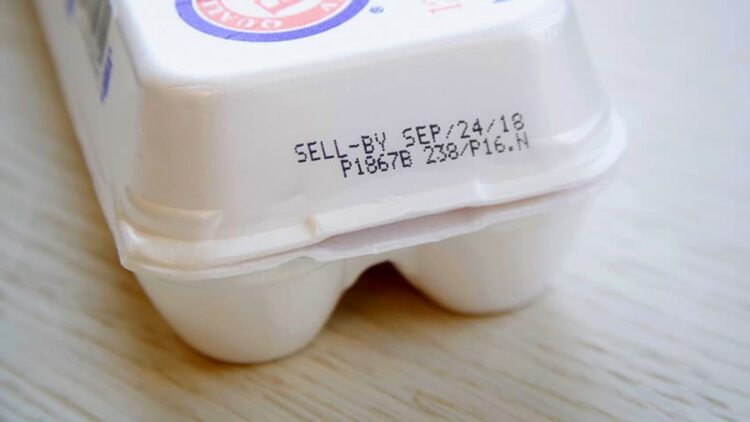
Expiration dates on products are often a guide for how to manage each food item. That’s why some supermarkets offer discounts on products nearing their expiration date. Now, in California, shoppers will soon no longer see expiration dates on food labels, following a new law mandating a redesign of the labels. The changes aim to reduce waste and clarify expiration dates.
The state is the first to ban food labels such as ‘sell by’ or ‘best before’
This change is happening in California, where lawmakers have passed new food safety regulations that will take effect in July 2026. The state is the first to ban food labels such as “sell by” or “best before,” according to a law signed by Governor Gavin Newsom. As explained above, expiration dates, for example, often serve as a guide for stores to remove products from shelves, not as an indicator of whether the product is still safe to eat. Therefore, the state of California aims to help end the everyday debate in households about whether the food in the refrigerator is still safe to consume.
California aims to eliminate these practices, helping consumers stop guessing about the products
Experts point out that food labels that say “sell by” or “best before” are misleading because they lack a universally recognized meaning under current law. Therefore, under the Food Safety Labeling Act (AB 660), food manufacturers will no longer be allowed to use expiration dates. California aims to eliminate these practices, helping consumers stop guessing about the products and other items in their refrigerators. Labels will now say “Best before” to indicate when the food is at its freshest, or “Best before” for products that may spoil after a certain time.
We must remember that food waste is more common than we might imagine
The goal is for businesses to adopt clearer, more standardized language, in line with the understanding and reality of the public. Furthermore, the legislation signed by Newsom aims to reduce both food waste and the state’s emissions that contribute to global warming. Lawmakers say the measure will help prevent perfectly good food from being thrown away because consumers misinterpret the true meaning of expiration dates. We must remember that food waste is more common than we might imagine, and given the number of people living in poverty, it is unacceptable. We could say that what is waste for some is a necessity for others.
The labels have created confusion among consumers and are responsible for nearly 20% of the nation’s food waste
The problem is that people often confuse expiration dates with the date when it’s unsafe to eat food. In reality, retailers primarily use them to manage their product inventory. Because there are no federal regulations dictating what information these labels must include, the labels have created confusion among consumers and are responsible for nearly 20% of the nation’s food waste, according to the Food and Drug Administration (FDA). Therefore, the new regulations are part of a broader effort to improve food labeling for consumers.
These kinds of “waste” are unacceptable to any country or state. For example, in California, this waste amounts to about six million tons of non-expired food thrown away every year. And all because, as mentioned above, many people assume that the expiration date means the food is no longer safe to eat. Therefore, before throwing food away, it’s advisable to make sure it’s actually unfit for consumption.