
The last time a human being walked on the Moon was on December, 14, 1972. During the Apollo 17 mission, astronaut Gene Cernan gave a very emotional speech before leaving the lunar surface. At that moment, he didn’t know it would be the last person on the Moon for a long time.
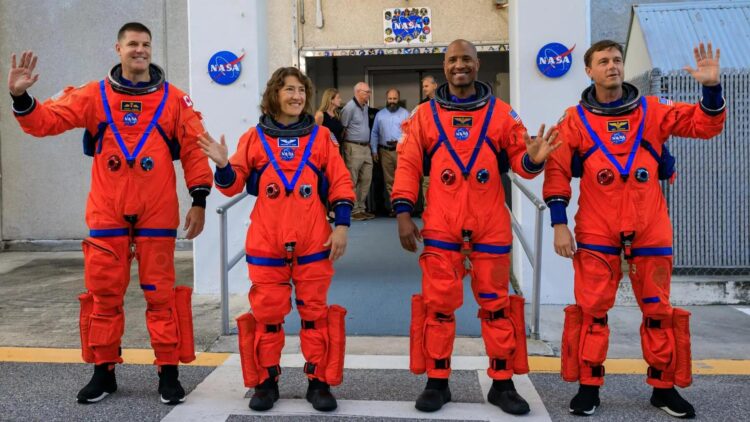
Today, NASA is preparing for the Artemis II mission, which will fly around the Moon but will not land. It will still be the first time humans travel near the Moon since Apollo 17. But, why has it taken so long to go back to the Moon? It has to do with politics, money, technology, and priority changes. So, let’s learn more about this.
Political will
According to Teasel Muir-Harmony, historian from the Smithsonian National Air and Space Museum, the main reason why it took so long to go back to the Moon is political will. Sending humans to the Moon requires long-term commitment from the government, and these missions are extremely expensive, highly complex, and take many years to complete.
After the Apollo program ended because of budget cuts, different U.S. presidents introduced new plans to return to the Moon. However, each time a new administration came into office, space priorities changed.
Les Johnson, a former chief technologist at NASA, explained that every four or eight years, NASA’s human spaceflight goals were often completely altered. For example:
- President George H.W. Bush directed NASA to return to the Moon.
- President Bill Clinton canceled that plan and focused on building the space station.
- President George W. Bush later shifted attention back to the Moon with a project called Constellation.
- President Barack Obama prioritized asteroid missions.
- President Donald Trump returned focus to lunar goals.
- President Joe Biden continued the lunar effort instead of canceling it.
This pattern of starting and stopping major programs made it very difficult to maintain the long-term effort needed to send humans back to the Moon.
Why not simply repeat the Apollo program?
Many people think that if we were able to go to the Moon in the 60s and 70s, why can they repeat the same plan? The answer is that Apollo ended. The factories, supply chains, and specialized workers who built the rockets and spacecraft no longer exist in the same way. So, rebuilding that entire system would not be practical.
Wayne Hale, former manager of NASA’s Space Shuttle program, said that what was “wrong” with Apollo is that it ended. Once it stopped, the infrastructure disappeared.
It is true that modern computers are far more powerful than those used during Apollo. However, human spaceflight remains extremely complex, dangerous, and expensive. Advanced computers alone do not make lunar missions easy or cheap.
The Artemis program and the goal on the Moon
The current NASA effort is called the Artemis program and it uses new technology, including Orion spacecraft, whose flight computers:
- Are 20,000 times faster than the one used during Apollo.
- Have 128,000 times more memory.
- The capsule also has more living space, carrying four astronauts instead of three. It even includes a small private bathroom.
Something that has also changed is the goal. Apollo’s main goal was to plant a flag and demonstrate national strength during the Cold War. President John F. Kennedy had set a deadline to land a man on the Moon before the end of the 1960s to compete with the Soviet Union.
However, now NASA aims to build an infrastructure so that humans can live and work on the Moon in a sustainable way, including habitats and possibly using lunar resources, such as water ice found near the poles.
Geopolitical pressure
The Moon is once again the main issue when it comes to international competition. In the 1960s, the U.S. competed against the Soviet Union and now China plans on sending astronauts to the Moon before 2030.
The U.S. government has introduced international agreements called the Artemis Accords, which more than 60 countries have joined. These agreements promote peaceful and sustainable space exploration. However, China has not signed them.
Some experts believe a second space race may be happening. At the same time, NASA must balance competition with safety. Let’s remember the tragic Apollo 1 accident in 1967, which killed three astronauts during a ground test, and later shuttle disasters such as Challenger and Columbia. All of this reinforced the importance of managing risk carefully.
Private companies
Another major difference today is the involvement of private space companies. NASA now works with companies such as SpaceX, Boeing, and Blue Origin.
SpaceX, led by Elon Musk, has even discussed building a self-sustaining city on the Moon before focusing fully on Mars. According to NASA historian Brian Odom, this partnership between government and private industry has made returning to the Moon more achievable.
So…
The possibility of humans living and working on the Moon is becoming more realistic. The journey back has been long, but the strategy to return has never completely disappeared.