
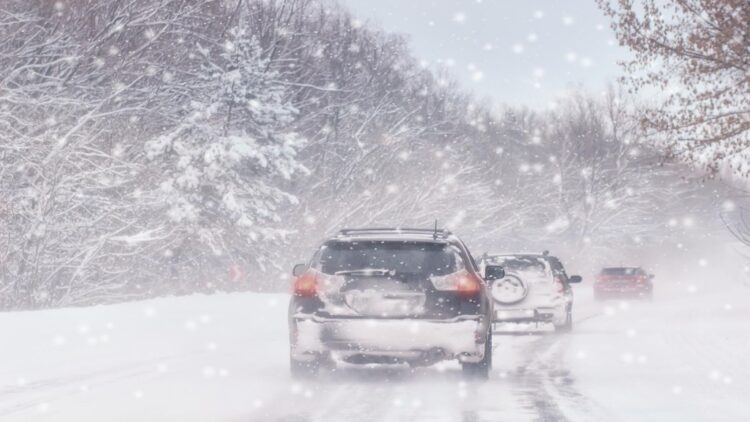
Highway laws are being tightened in Minnesota to improve road safety. Specifically, during harsh winter conditions, drivers must adhere to several vehicle regulations. Keep your headlights on so other drivers can see you, especially in very low temperatures that often cause freezing, frost, and ice to accumulate on windows and windshields. These must be cleared for clear visibility. Clear vision allows you to anticipate potential hazards on the road.
During the winter conditions vehicles must be kept as clear as possible
In detail, Section 169.48 of the 2025 Minnesota Statutes explicitly states that lights must be displayed and clearly visible. Snow and rain make driving difficult, as these elements blur and distort the driver’s vision, hence the importance of visibility on the roads. During these conditions, as well as any other type of precipitation such as sleet or hail, vehicles must be kept as clear as possible, as specified by other laws. For example, other statutes may cite penalties for failing to properly clear snow from a vehicle.
Poor practices can affect both other drivers and pedestrians
All of this is of great importance, as some states have mandated it by law, with fines for those who do not comply. Road safety is not only the responsibility of drivers, but also of pedestrians. Poor practices can affect both other drivers and pedestrians, which is why exercising extreme caution is essential. Furthermore, winter inevitably brings colder weather, meaning that the air interacts differently with humidity, light, and various surfaces, altering drivers’ visibility on the road.
In 2024, there were 18,053 DUI arrests and 5,820 outstanding DUI warrants in the state
On the other hand, Minnesota is one of the states in the country with the most DUI convictions—twice the national average. This is a factor to consider when revising traffic laws. In 2024, there were 18,053 DUI arrests and 5,820 outstanding DUI warrants in the state as of the end of September. This also tends to influence new traffic regulations.
In Minnesota, a first DUI offense is considered a misdemeanor
Regarding penalties for driving under the influence of alcohol, it’s important to remember that each state handles them differently. In Minnesota, a first DUI offense is considered a misdemeanor and is punishable by fines, license suspension, potential IID installation, completion of a substance abuse course, and potential jail time. Repeat offenses result in increased penalties and sanctions, or even long-term consequences.
With the cold weather, fog often increases, significantly hindering visibility on the roads
Returning to winter regulations, the fact is that with the weather conditions, glare from other lights increases, road markings and other vehicles become harder to see, and the risk of collision increases. Furthermore, with the cold weather, fog often increases, significantly hindering visibility on the roads. The law states that headlights must be on in the following situations: “Every vehicle upon a highway within this state: (1) at any time from sunset to sunrise; (2) at any time when it is raining, snowing, sleeting, or hailing; and (3) at any other time when visibility is impaired by weather, smoke, fog or other conditions or there is not sufficient light to render clearly discernible persons and vehicles on the highway at a distance of 500 feet ahead.”
Ultimately, these types of rules and laws are created to protect citizens, that is, to prevent accidents. We can all agree that nobody wants to be caught in a heavy snowstorm on the road. And as the Minnesota Department of Public Safety (DPS) wrote: “It’s about both seeing and being seen.” If we comply with this, we will have already made a good decision as citizens.