
We have spent decades repeating the same wellness motto: working out extends your life. That idea has been the go-to for motivating folks, marketing healthy lifestyles, and explaining why we punish ourselves with hard workouts.
But how much of that is actually fact? Physical Education professor and longevity expert Felipe Isidro unpacked this on Uri Sabat’s podcast, one of the most famous Spanish-speaking podcast available on Youtube and his perspective is surprisingly direct.
Isidro argues that working out does not make us invincible, nor does it delay our expiration date. “We are stuck in a confirmation bias thinking that fitness buys us more time, but that is just not the case… people who exercise are still going to die, and we won’t die any later than we would have if we didn’t work out,” he states.
The mixup between healthspan and lifespan
A lot of the research connecting movement to a longer life compares groups that are totally different to begin with: active folks versus couch potatoes, or athletes versus people who barely move.
Isidro points out that the real problem is that working out is rarely an isolated habit. It typically goes hand-in-hand with eating better, smoking less, and having better medical care.
“If you look at twins, the one who works out doesn’t actually outlive the one who doesn’t,” he notes. Even so, Isidro is a huge advocate for working out every week—not to add years to your timeline, but to boost your daily experience and cut the risk of an early death.
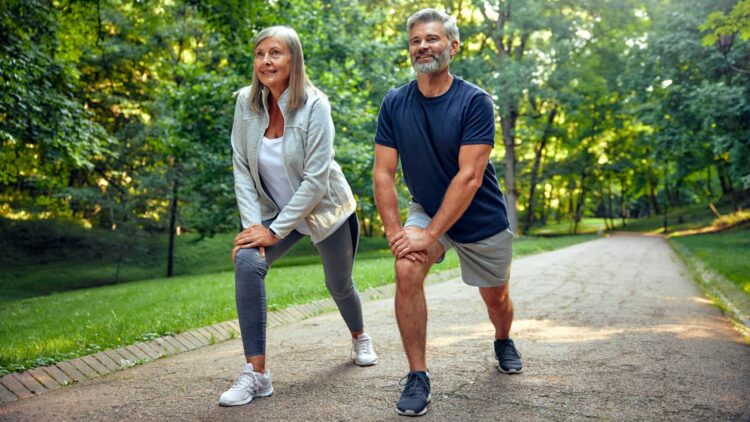
“Fitness doesn’t make your life longer, it makes it wider,” he claims. Basically, staying active helps you get older while keeping your body functional, sleeping better, feeling stronger and quicker, and staying in a better headspace.
Most people have been able to compare this dichotomy between healthspan and lifespan when observing their elderly. When looking at our grandparents, they might have passed away at similarly ages, but the ones who kept moving after retirement—tending to their garden, running errands on foot around their neigborhood, swimming everyday if they lived by the beach—remained physically independent for longer than those relatives who lived in a small apartment and did little else apart from watching TV.
On the podcast, Isidro suggests that the ideal routine kicks off with strength training and finishes with cardio. Shoot for two or three workouts a week, keeping them brief if you have to. “The heart and lungs rely on the peripheral system, so if you don’t prep the muscles first, your cardio performance will fail,” he concludes.
Other experts take on the matter
Felipe Isidro is not a pioneer nor going against the grain; many other experts on the subject have also been openly vocal on how they personally priorize healthspan, rather than reaching the century old landmark. Back in 2014, a 57-year-old bioethicist named Dr. Ezekiel Emanuel wrote a controversial piece for The Atlantic called “Why I Hope to Die at 75.”
Chasing the longest life possible isn’t worth it if those bonus years are just filled with sickness and frailty, which is exactly what the stats predict for a lot of Americans.
Tim Peterson, who runs a startup called Healthspan Technologies, points out that hitting the century mark is amazing, but it loses its appeal if you spend those final thirty years feeling miserable.
Life expectancy vs. real quality of life
Those who were born in 1922 were only expected to live up to 60 years (right on time to collect their pension, what a coincidence, huh?). Today, an American born in 2022 has a life expectancy of 78. Apart from making the pension system inviable— it was never built to take into account elderly taxpayers living off of Social Security benefits for nearly two decades on average—these golden years are plagued with chronic issues like cancer, dementia, and heart disease.
Peterson adds that a lot of Americans are also missing out on sleep, skipping exercise, or eating poorly, which all harm long-term wellness. This isn’t just an issue in the States, though. According to 2019 data from the WHO, the average global lifespan has climbed to 73.4 years, while the years spent in good health are lagging behind at 63.7.