
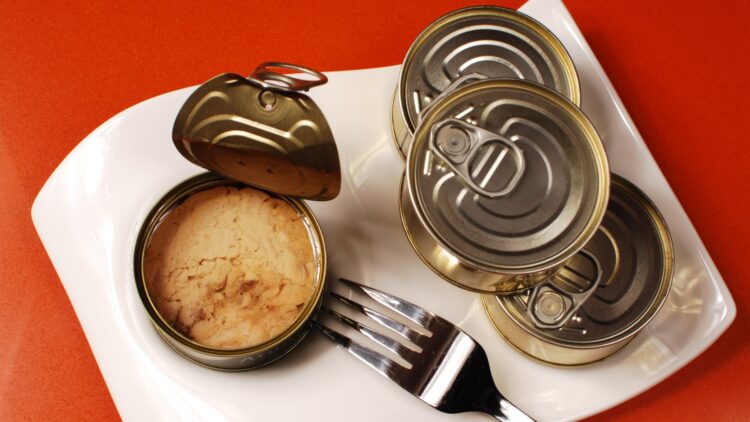
It’s a scene that repeats itself constantly in the aisles of our supermarkets. You stand in front of the endless wall of canned fish and face the classic decision: on one side, the golden or cleanly designed can that promises “Solid White Albacore.” On the other, the more modest can, often with brightly colored labels, that says “Chunk Light Tuna.” And, believe it or not, between those two options, there is a correct answer.
It’s all a plan designed by marketing experts to get us to choose what they want us to choose. Solid White is a more expensive product. It has a firmer texture and a milder flavor. No sooner said than done. We pick it up and add it to our cart. It must be better, obviously. On the other hand, Chunk Light, with its flaky texture and bargain price, is perceived as the low-quality option. Or rather, what you would add to your cat’s bowl, not your salad.
Are we buying canned tuna incorrectly?
Choosing “the best” can have consequences for your health. This is what food safety and toxicology experts warn. When we choose the “premium” option, we could actually be tripling the amount of mercury we put into our bodies. The incredible thing about all this is that the cheapest option may taste less appealing. Or a less interesting texture. But it is the cleanest option. It is the one that contains the least amount of heavy metals.
To understand why we are buying the wrong thing, we must look beyond the brand. We must understand what animal is inside the can. The distinction between White and Light is not just a matter of meat color; it is a distinction between species with radically different life cycles.
When you buy “White Tuna,” the FDA (Food and Drug Administration) requires that it be exclusively Albacore. This is a robust fish, a large predator that can live for more than a decade and reach significant weights.
On the other side of the ring, the label “Light Tuna” usually contains Skipjack. Skipjack is a much smaller tuna, with a fast life and short cycle. While Albacore is a giant that patrols the oceans for years, Skipjack is comparatively a perpetual teenager.
And this is where heavy metals come into play. Mercury (specifically methylmercury) is part of the food chain in the seas and oceans. This metal from the periodic table follows a one-way path in the oceans. Plankton initially captures the mercury. Then, small fish feed on the plankton and absorb the metal. Subsequently, larger and larger fish pass on the mercury. Until it reaches the largest fish, those that have hardly any predators. Albacore tuna, being at the top of the food chain, acts as a mercury graveyard. Its muscles accumulate this dangerous metal throughout its life. The mercury will obviously end up in your salad.
Size does matter
According to Blanca García-Orea, an expert in clinical nutrition, there is a simple rule we can follow to avoid making mistakes when buying canned tuna. The expert points out that the larger the fish, the more mercury it can accumulate. The Solid White tuna that we love so much for its flavor is actually a huge animal. Paradoxically, in the dilemma we posed at the beginning of the article, it is the worst option of the two. It is the one that contains the highest toxic load.
When quantifying the danger, the FDA and EPA consider that Albacore contains three times higher levels of mercury than light tuna.
In any case, the mercury content of tuna should concern us depending on our consumption patterns. An adult who sporadically eats a can of tuna will not be exposed to any risk. However, for regular tuna consumers, weekly consumption of Albacore will pose a health risk. In addition, experts advise against children consuming this species. If you are shopping for the whole family, light tuna is a much safer product. However, it is not advisable to overindulge in it and you should supplement your diet with other sources of protein so as not to exceed the recommended safety limits.