
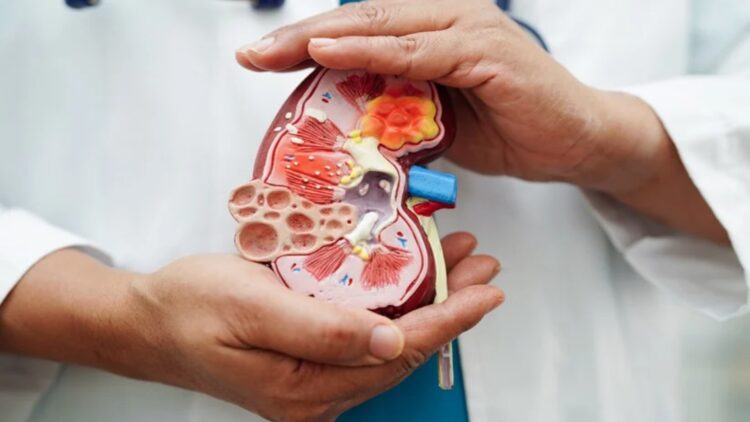
After more than 10 years of research, scientists are getting closer to solving one of the biggest issues in kidney transplants: blood type compatibility. Today, many people must wait for a long time for an organ that matches their blood type, and some people die before a suitable organ becomes available.
A team of researchers from institutions from Canada and China have made an important discovery when creating what they call a ‘’universal kidney,’’ an organ that could potentially work in patients with different blood types. The study, published in Nature Biomedical Engineering, showed promising early results. So, let’s find out more about this positive news.
Importance of blood type
Blood type is a key factor to determine whether a person can receive a donated kidney. For example, people with O blood type tend to need an O type kidney too, which is very difficult because more than half of patients on transplant waiting lists have type O blood, while the number of available type O kidneys is limited.
Organs of type O are also used for people with other blood types, which makes the shortage even worse. Although doctors can sometimes transplant kidneys between different blood types by preparing the patient’s immune system, this process is complicated because it takes time, costs a lot of money, and carries risks.
Also it requires a living donor because the patient needs time to undergo medical preparation before the transplant. Because of these limitations, scientists have been searching for new and safer solutions.
‘’Universal kidney’’
In this research, scientists found a way to change the blood type of a kidney: they took a type A kidney and were able to transform it into something similar to an O type kidney. To make this possible, they used special enzymes that have been identified in previous studies.
These enzymes act like tiny molecular scissors. They remove sugar molecules called antigens that mark a kidney as belonging to a certain blood type. By cutting away the antigens that identify type A blood, the researchers removed the features that make the immune system see the organ as foreign.
Biochemist Stephen Withers from the University of British Columbia in Canada explained the process with a simple comparison. He said it was like removing red paint from a car to reveal a neutral base underneath. So, once the identifying markers were gone, the immune system was less likely to reject the kidney.
What happened during the experiment?
The modified organ was placed inside the body of a brain-dead recipient to see how it would function in a human model. The organ survived and worked for several days, which gave researchers very important information about the potential of this technique.
However, there are still some challenges. On the third day, the organ started to show signs of its original type A again, which caused an immune response. Scientists also observed signs that the body was beginning to tolerate the kidney.
Stephen Withers highlighted that it was the first time this type of experiment was made on a human model and that the results offer valuable clues to improve long-term transplant results.
Urgent need for new solutions
The need to improve these kinds of transplants is urgent. In the U.S., 11 people die every day while waiting for a transplant, and most of them are specifically waiting for type O kidneys because they can’ receive other blood type organs.
Scientists are studying new ways to solve this issue. Some of them are researching the use of pig kidneys, and others are developing new antibodies that could help prevent organ rejection. Expanding the number of kidneys that patients can safely receive could significantly reduce waiting times and save lives.
So…
Creating an organ that can match more people would make a major difference, especially for patients who currently have very limited options. Researchers believe that combining years of basic science with real medical testing is helping move transplant medicine closer to practical solutions. Fortunately, we have good news from the world of science.