
For years, the press has only reported on Elon Musk and his private crusade against state space agencies such as NASA. Space X, with its Falcon rockets and Starship’s excessive ambition, had dominated the headlines.
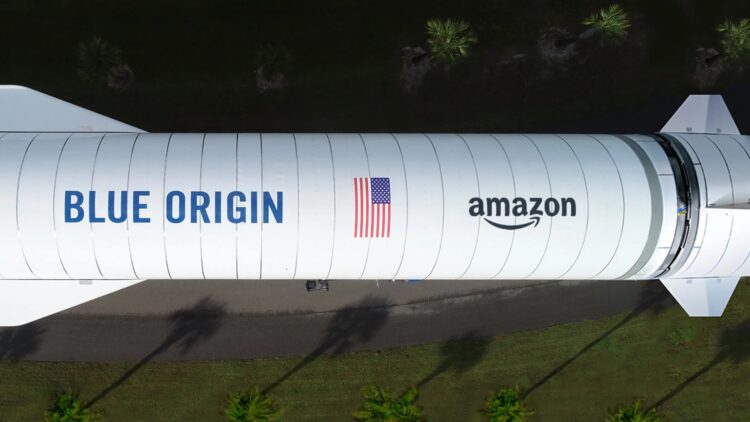
However, he is not the only visionary obsessed with space. Others have been much more discreet, such as Jeff Bezos and his company Blue Origin, which has been investing billions of US dollars waiting for a moment to entertain in orbit. The moment has arrived, and we cannot fail to notice it. And the star of the show is not the much-hyped Starship, but Mr. Bezos’ New Glenn.
The New Glenn, a 98-meter-tall rocket, is ready for its second orbital flight, known as NG-2, which will carry NASA’s ESCAPADE mission to Mars. The launch date, if all goes well, will be Sunday, November 9, 2025 (or later).
A silent giant
Although Elon Musk has dominated the headlines, Jeff Bezos’ ambition for space began much earlier. He founded Blue Origin in 2000, and has been characterized by slow but methodical product development, with no room for cracks or errors in the rockets designed. In 2015, they began developing the New Glenn rocket—named after legendary astronaut John Glenn—and a decade later, we can see it completed. This has been years in the making; its own engine (the BE-4 fueled with liquid methane) began development in 2011.
Best of all, unlike NASA and its use of taxpayer money, Blue Origin is primarily funded by personal wealth. Mr. Jeff Bezos injects billions of dollars—from the sale of shares in his company Amazon—to finance the projects. His desire is to ensure an infrastructure with which, in the future, millions of people can live and work in space.
The New Glenn Rocket
This engineering marvel is designed to compete in the heavy-lift category. It is 98 m high and 7 m in diameter, making it one of the largest launch vehicles ever built. It is powered by seven B e-four engines running on liquid methane and liquid oxygen in its first stage. It is a clean and efficient combustion engine, necessary for the future of interplanetary travel.
Its maiden flight took place on January 16, 2025. On its debut, the rocket managed to reach orbit—fulfilling its primary flight objective—but failed in its landing attempt. Considering that they are looking to reuse the toys, it felt like a partial failure of the mission.
ESCAPADE: Mission to Mars
Now, the next target for the Newlin rocket is NASA’s Escapade mission. The scientific goal of Escapade is to study Mars’ magnetosphere. Scientists want to understand how the red planet lost its atmosphere, as this is essential for human life. ESCAPADE is carrying twin probes, Blue and Gold, built by Rocket Lab, to study the planet. This mission would be the first launched by NASA using a private vehicle.
It is difficult to launch a rocket; it is 100 times more difficult to land it again without damaging it. If they manage to land the rocket vertically without damaging it, it would mean reusability and savings of millions of dollars in technology. This is where SpaceX already has experience, so Blue Origin will have to prove its worth. The New Line must perform a vertical propulsive landing. The landing is scheduled to take place on the autonomous barge “Jacklyn” (named after Jeff Bezos’ mother) in the Atlantic Ocean. If this attempt is successful, the impact of reusability on space technology would be immense. We would go from having isolated missions to being able to reuse rockets over and over again as if they were inter-space buses.