
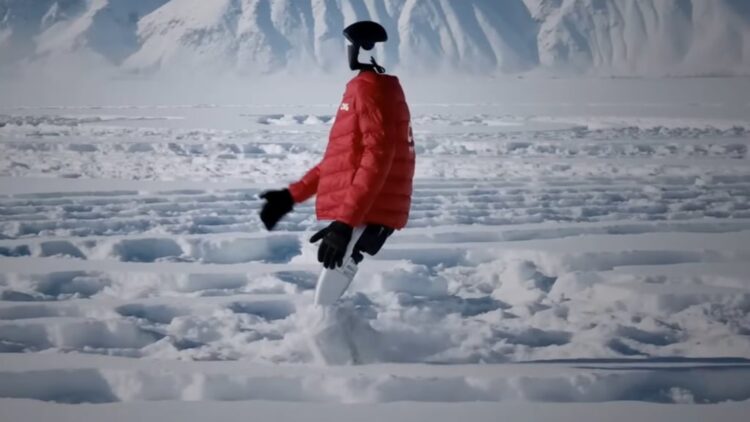
A humanoid robot in China has achieved something many electronic devices couldn’t handle. In an extreme temperature of -47.4 degrees Celsius, this robot walked more than 13,000 steps across a frozen snowfield in the Altay region of Xinjiang. While doing so, it traced the shape of a Winter Olympics emblem on the ice.
This event is relevant because extreme cold tends to seriously affect technology. At these temperatures, mobile phone screens work slower, batteries lose power, and many electronic systems stop working properly. So, let’s learn more about this humanoid robot and its achievements, shall we?
Walking on extreme cold temperatures
The robot involved in this test is called the Unitree G1, and it carried out its long walk in Altay, a region in Xinjiang, northern China. Altay is often promoted as a birthplace of skiing, and winter temperatures there regularly fall to extremely low levels.
During the test, the humanoid robot followed a pre-planned path across snow and ice. As it moved, it traced a Winter Olympics emblem measuring about 186 meters long and 100 meters wide. Over the course of this journey, it took more than 130,000 steps.
What’s more, the robot walked autonomously, which means it was not being directly controlled step by step by a human operator. Instead, it adjusted its own balance while moving over slippery ice and uneven snow. Walking on such terrain is difficult even for people, making the achievement significant for robotics.
How the humanoid robot survived
To prepare the robot for the freezing environment, engineers from Unitree Robotics made practical adjustments to protect its hardware.
They dressed the robot in a bright orange winter jacket to cover its torso, and its legs and feet were wrapped in plastic sleeves. These protective layers were designed to shield important components such as motors, joints, and battery packs from ice, wind, and freezing temperatures.
Extreme cold can reduce battery efficiency and make mechanical parts stiff. By adding physical protection, the engineers helped ensure the robot could continue functioning throughout the test.
Technology
What’s inside the robot? We can find advanced navigation and sensing systems that helped it move safely. The humanoid robot used China’s BeiDou Navigation Satellite System for positioning, which provides very precise location data, accurate down to the centimeter level. Such precision was necessary for the robot to follow its planned path and correctly trace the Olympic emblem.
Apart from satellite navigation, the robot relied on adaptive path planning software that helped it decide where to place each step while walking across the frozen ground.
Then, sensors such as 3D lidar and depth cameras constantly collected information about the environment. These sensors allowed the robot to detect uneven surfaces and maintain balance on the icy terrain.
Size, and power
The Unitree G1 is not a large, human-sized robot. It stands about 127 centimeters tall and weighs around 35 kilograms and, depending on its configuration, it uses between 23 and 43 joint motors to move its limbs.
The robot is powered by a quick-release battery that lasts close to two hours. Its joints can produce up to 120 newton-meters of torque, which gives it the strength needed to walk steadily in difficult conditions.
Importance of this
Now, humanoid robots are mainly used in pilot programs and testing environments rather than in everyday factories or warehouses. Extreme trials like the one in Altay serve two main purposes:
- First, they demonstrate what the technology can achieve.
- Second, they act as stress tests, pushing the robot to operate under harsh conditions.
As we can see, humanoid robots may eventually be capable of working in environments where weather conditions are severe. What do you think the possible futures uses for this robot could be? Maybe inspecting icy power lines or assisting first responders during winter storms?