
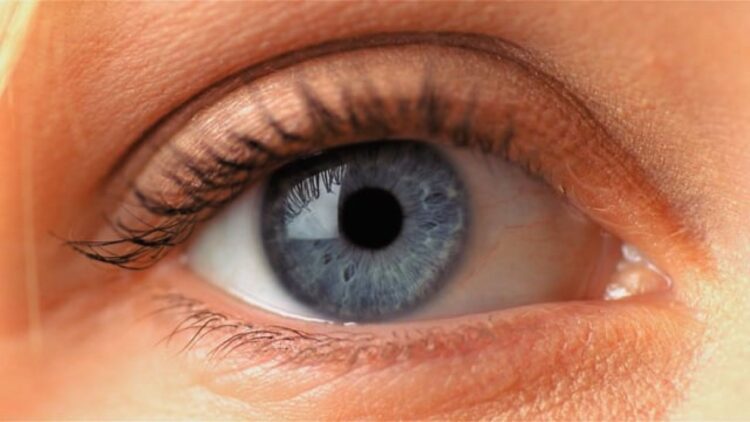
Blinking is an innate behavior that humans do almost unconsciously. Perhaps people with eye conditions are more aware of their blinking, mainly because they have some kind of visual disturbance that makes them more conscious of it. But the fact is that, aside from the physiological aspect, various studies in cognitive neuroscience have shown that this frequency is not random. When the brain is faced with a task that requires concentration, such as understanding speech, the number of blinks decreases.
Their goal was to determine whether environmental factors, such as noise, influence how the brain regulates this gesture
Therefore, blinking in some situations is not random. A team of researchers from Concordia University in Canada analyzed this relationship between blinking and auditory attention. Their goal was to determine whether environmental factors, such as noise, influence how the brain regulates this automatic gesture while processing verbal information. “We wanted to know if blinking was affected by environmental factors and how it related to executive function,” explains Pénélope Coupal, a psychology researcher at Concordia University in Montreal.
“For example, is there a strategic synchronization between a person’s blinks so that they don’t miss what’s being said?”
The research was based on two experiments conducted with a total of 49 participants. During the tests, the volunteers listened to sentences read aloud while scientists recorded their blink rate. “For example, is there a strategic synchronization between a person’s blinks so that they don’t miss what’s being said?” the experts wondered. The Canadian researchers discovered that we tend to blink less when we hear someone speaking, especially when there is background noise.
The results provided clear answers for the researchers
The researchers modified two aspects to better detect changes in blinking patterns. First, they adjusted the background noise level to make it easier or harder to understand the message. Second, they changed the lighting conditions to assess whether visual effort influenced blinking. The results provided clear answers for the researchers: blinking decreased consistently while participants listened to the sentences, compared to the moments before and after. Furthermore, the greater the ambient noise, the lower the blinking frequency.
“In fact, we systematically blink less when presented with relevant information”
Researchers have confirmed that “we don’t blink randomly,” adding, “In fact, we systematically blink less when presented with relevant information,” Coupal said. No significant changes in blink rates were observed under different lighting conditions, suggesting that it was the cognitive effort of understanding speech, rather than visual effort, that influenced blinking.
When the brain needs to work harder to decipher a message it reduces blinking
Although each person blinks at a different rate, the pattern was consistent across all participants. “Our study suggests that blinking is associated with losing information, both visual and auditory,” says psychology researcher and acoustics engineer Mickael Deroche, from Concordia University. When the brain needs to work harder to decipher a message, especially in noisy environments, it reduces blinking.
Blinking involves a brief visual “disconnection,” and in situations of high informational relevance, this pause is minimized
Researchers explain that the brain may be limiting this gesture to minimize interruptions in the intake of sensory information. There is also research suggesting that blinking acts as a kind of mental pause for the brain while it processes written sentences or responds to emotional cues. Blinking involves a brief visual “disconnection,” and in situations of high informational relevance, this pause is minimized. Therefore, blinking less frequently could be a sign that the brain is paying attention.