
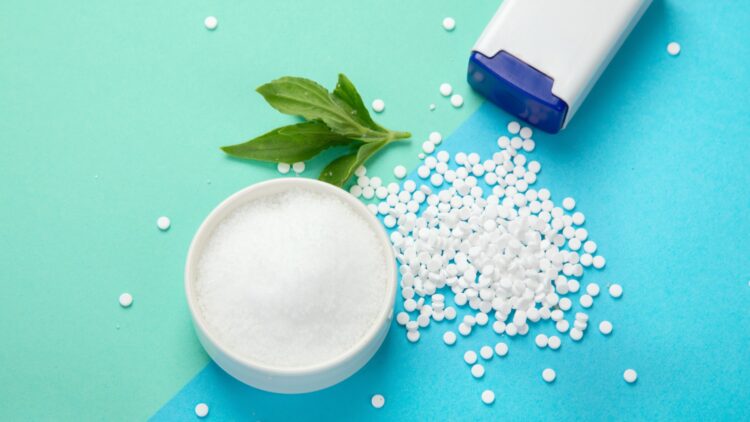
We used to believe artificial sweeteners were the answer to making sugary treats healthier, but lately, some of the biggest zero-calorie names are causing concern. There is a rising natural alternative that might soon be mass-produced using enzymes derived from slime mold.
This natural sugar is known as tagatose, and it offers about 92 percent of the sweetness you get from table sugar while having only a third of the calories. The best part is that it avoids the insulin spikes caused by regular sugar or high-intensity substitutes, so it looks like a solid option for people dealing with diabetes or blood sugar problems.
A new artificial sweetener
Scientists at Tufts University, teaming up with biotech companies Manus Bio in the US and Kcat Enzymatic in India, have finished a proof-of-concept study showing that tagatose can be made cheaply and sustainably—solving a problem that has previously stalled the industry.
Tagatose is a rare, naturally occurring sweetener that exists in tiny amounts in things like fruit and dairy. It presents a healthier alternative to both table sugar and artificial sweeteners, which are known to cause sharp spikes in insulin. A big reason it acts differently is that a large portion of it seems to ferment in the large intestine. Your small intestine only absorbs a fraction of it into your blood.
Why not all sugars are made equal
Your gut processes this rare sugar much like fructose—so if you have trouble with fruit sugar, you should probably avoid this too—but both the FDA and the WHO generally consider it safe to eat. Tagatose is also seen as good for your teeth and might even offer prebiotic benefits for the bacteria in your mouth.
While regular sugar feeds the mouth bacteria that cause cavities, early studies show that tagatose actually stops those harmful microbes from growing.
One huge bonus is that you can bake with tagatose, which isn’t possible with a lot of other strong sugar replacements. The promise is real, but until now, the market has been held back because we simply couldn’t make enough of the stuff.
“We already have ways to make tagatose, but they cost too much and are pretty wasteful,” explains Nik Nair, a biological engineer at Tufts.
The making of this new tagatose
“We came up with a way to make it by modifying E. coli bacteria to act like little factories, filled with the specific enzymes needed to churn out tagatose from ordinary glucose.” To get technical, the scientists put a newly found enzyme from slime mold—called Gal1P—into the bacteria. This enzyme turns glucose into galactose, which a second enzyme then transforms into tagatose.
With this new sequence, Nair and his team proved they can push tagatose yields as high as 95 percent, which blows the current standard of 40 to 77 percent out of the water.
“The real breakthrough in making tagatose came from discovering the slime mold Gal1P enzyme and splicing it into the bacteria we use for production,” says Nair.
“This let us flip a natural biological switch that usually breaks galactose down into glucose, allowing us to instead create galactose from the glucose we provided. From there, we can synthesize tagatose and possibly other rare sugars too.”
The group still needs to tweak their production line a bit, but they hope their approach offers a helpful blueprint for creating other rare sugars in the future.The findings were published in the journal Cell Reports Physical Science. Some estimates predict the tagatose market will grow to be worth $250 million by 2032.
In the meantime, we might have to be honest with ourselves and realize that the best way to reduce our sugar intake… is by not eating it at all, even if that means skipping dessert. After all, Chrismas is over, and we can no longer delude ourselves thinking those chocolates and gingerbread biscuits were remotely healthy!