
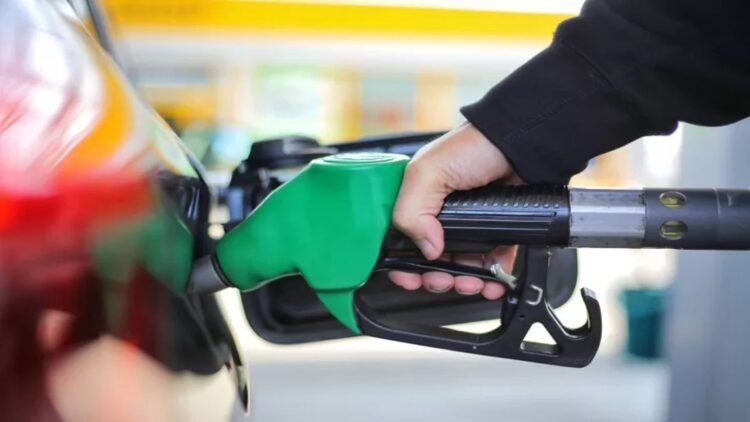
There are situations that might lead people to leave their car unused for an extended period. This often leads to the assumption that certain parts of the car won’t function properly, but the real reason isn’t always understood. This is something that happens, for example, with gasoline. Over time, gasoline evaporates, and residues can clog filters or leave particles in the tank. Proper car maintenance is essential to ensure its performance, durability, and safety, as a well-maintained car is a safer car.
Over time and with temperature changes, gasoline ‘evaporates’
An important point to consider is that gasoline doesn’t have an expiration date as such. That’s why it’s normal for many drivers to wonder how long gasoline lasts before causing problems, and at Autopistas we’ll answer that question. Juanjo Jiménez, a mechanic with extensive experience who frequently posts videos on social media explaining mechanical topics, recently addressed this issue. According to Yamovil, gasoline is a mixture of petroleum-derived products, which are volatile. Over time and with temperature changes, it “evaporates,” leaving a pasty, sticky residue inside the fuel tank. Regarding this, Jiménez explains that “after a while, the gasoline in the tank loses its properties and begins to decompose.”
With all of the above in mind, it’s crucial to check the engine oil, coolant, and brake fluid. It’s also essential to perform checks on the brakes, electrical system, and tires, as these components can wear out with use. The pasty residue that forms over time is difficult to remove, and when it enters the fuel system, it can clog the fuel pump, filters, injection system, and even the fuel tank itself.
After six to twelve months, gasoline is likely to accumulate more residue in the tank
In short, gasoline doesn’t have an expiration date, but it does gradually lose its properties and can damage your vehicle. Fuel typically lasts between three and six months, according to an article from the Royal Automobile Club of Spain. After six to twelve months, gasoline is likely to accumulate more residue in the tank. This can be seen, for example, by a change in the fuel’s color, which turns brown. Furthermore, gasoline’s shelf life depends on several factors, such as its quality and additives. Other effects include the hydrocarbon’s contact with oxygen, exposure to light, the presence of metals, and humidity.
In short, the care you give your vehicle will never be in vain, as it will extend its lifespan. Furthermore, it’s important to remember that current models incorporate the latest technologies which, if properly maintained, can allow a vehicle to easily last over a decade on the road. On the other hand, there’s the battery, which the mechanic confirms will likely fail within six months if the engine isn’t started.
The gasoline can also be contaminated or adulterated
In addition to all of the above, there are ways to ensure that the gasoline is in good condition to avoid endangering the safety of those inside the car. It’s not just about the car not running for a long time; the gasoline can also be contaminated or adulterated, so it’s important to learn how to recognize quality fuel. The first thing to do is check the octane rating, which measures the fuel’s resistance to detonation. Most cars are designed to run on 87 or 93 octane fuel.
The point is, if you notice higher fuel consumption and need to make more frequent stops than usual to refuel, the gasoline has probably been adulterated. This not only benefits your vehicle but also your wallet, as it prevents you from wasting money on fuel if the type you’re using is defective. In any case, if you have any doubts, it’s best to consult an expert to avoid rookie mistakes.