
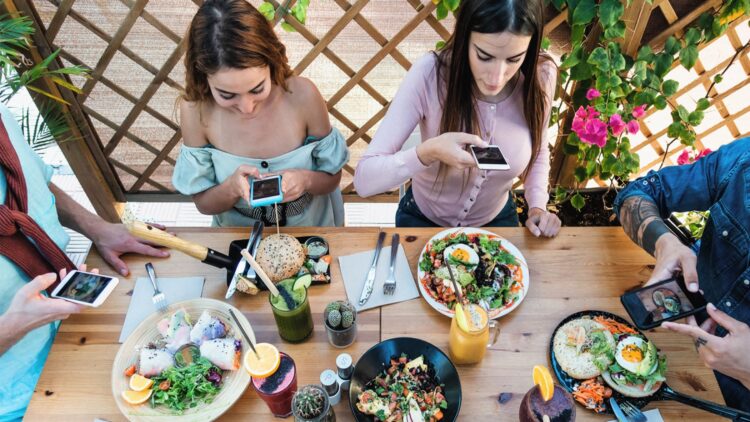
Social media seems to be a place where everything has a place. Videos or reels about entertainment, news, technology, influencers, and even food. More and more people are recreating recipes that go viral on TikTok or Instagram, and they’re increasingly turning to these apps for food ideas. Among Generation Z and Millennials, eating habits have changed compared to other generations. Experts point to less-than-ideal routines such as snacking too much and skipping main meals. Other issues include eating out at trendy restaurants and prioritizing aesthetics over health, among other things.
“I’m seeing some recurring misconceptions among Millennials and Generation Z about nutrition”
Based on the data we have, it’s safe to say that snacking means different things to Millennials and Generation Z. According to data from 84.51°, 74% of U.S. consumers under 35 snack or eat between meals at least twice a day, compared to 50% of those over 35. “I’m seeing some recurring misconceptions among Millennials and Generation Z about nutrition,” Kylie Sakaida, MS, RD, bestselling author and author of the first “No BS” (Bad Science) section at Factor, told The Post.
The rise of social media has coincided with an increase in food misinformation
Experts also discuss the fast-paced lifestyle of today’s youth. Without set schedules, always on the go, and with little control over how much time they dedicate to sitting down to eat. “Younger generations are constantly on the move. Whether it’s due to living in cities, demanding work schedules, or maintaining their fitness goals, they’re looking for products that can keep up with their hectic lifestyles,” says Emily Sheehan, Applications Manager EMEA at Edlong. Furthermore, the rise of social media has coincided with an increase in food misinformation and unhealthy eating habits among young people and those just reaching adulthood, experts warn.
So, getting down to brass tacks, some of the mistakes these generations make include prioritizing aesthetics over nourishment. Many people of this age have grown up immersed in hashtags like #WhatIEatInADay. These are videos where other people, their own age or younger, describe everything they eat in a single day. Remember, these aren’t experts or nutritionists; they’re simply people sharing their food, and interestingly, the meals they eat are always presented in a very appealing way. “Many people have internalized the idea that healthy food must have a certain appearance: low in carbohydrates, a perfectly plated meal, matcha in the morning, vegetable powder at midday,” Sakaida said.
A recent study found that nearly three-quarters of Gen Zers get their meal inspiration from social media
Continuing with the influence of social media, there’s the problem of ‘letting viral trends set the tone for eating’. This is similar to what we were discussing earlier. Many ideas about how to eat originate from social media. A recent study found that nearly three-quarters of Gen Zers get their meal inspiration from social media. On the other hand, there’s the idea that ‘health has to be extreme to be effective’, related to the number of ‘challenges’ or ‘detoxes’ advertised on social media.
Continuing with the line of mistakes described by experts, there’s the normalization of skipping meals in the name of wellness or productivity. This makes it easy to understand why 50% of people say they often eat snacks instead of a meal because they’re on the go, with 55% of consumers turning at least one snack into a meal per week. This can be detrimental, as we can push our bodies to unnecessary extremes, when the priority should always be on the food we eat to nourish our bodies. Finally, there’s the feeling of guilt for relying on convenience and treating food as social currency. These are characteristics that shouldn’t be associated with how we nourish our bodies.