
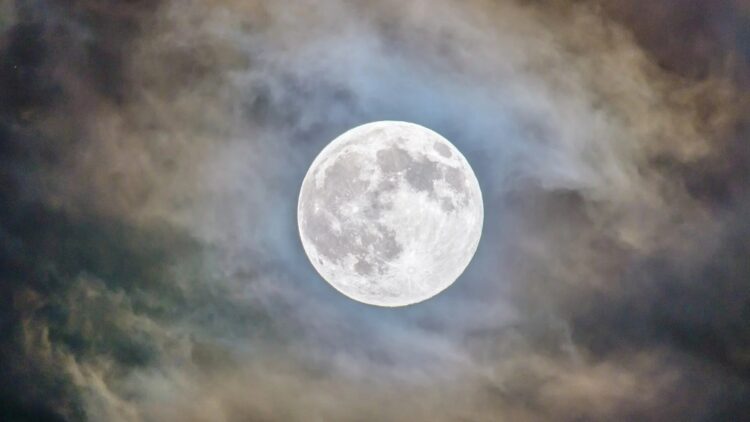
February’s full moon is one of the most visible and fascinating astronomical events of the winter season. It is known as the Snow Moon and it catches sky watchers’ attention every year because of its brightness and its rich historical culture. According to EarthSky and NASA scientist Noah Petro, the full moon of this year arrived at a special moment as space agencies prepare for future lunar missions such as Artemis II and Artemis III. So, let’s learn more about this event and other events you can watch.
When and how to see February’s full moon
This full moon reached its highest level of brightness at around 5:09 p.m., Miami time, just around sunset. According to EarthSky, the best moment to watch it iwas when it appeared low in the eastern sky during the evening.
However, NASA scientist Noah Petro, who leads the Artemis III scientific team at the Goddard Space Flight Center in Maryland, explained that the monn would appear full on different days too. So, people had more chances to enjoy it.
Petro encouraged people to watch the Moon in different phases. Looking at it when full and partially illuminated can reveal more about its geography and surface features. While some light and dark areas are visible to the naked eye, a telescope can reveal craters and finer details.
Why is it called the Snow Moon?
According to Farmers’ Almanac, this name comes from intense snow that tends to happen in North America during this month. What’s more, indigenous tribes also gave this moon unique names:
- The Comanche people called it the sleet moon.
- The Creek tribe referred to it as the wind moon.
- The Shawnee people named it the crow moon.
These names show how communities historically connected lunar cycles with weather and natural events. Learning them highlights the Moon’s importance in human culture.
Supermoons and other full moons in 2026
Sky watchers can also expect supermoons later this year, especially in November and December. A supermoon happens when the Moon is closer to Earth in its orbit, which makes it look brighter and slightly bigger than a regular full moon.
On average, the Moon is about 384,472 km from Earth and the December supermoon will be closer than that this year (around 356,740 km), according to EarthSky.
Farmer’s Almanac shows the rest of the full moons of this 2026:
- March 3: Worm Moon
- April 1: Pink Moon
- May 1: Flower Moon
- May 31: Blue Moon
- June 29: Strawberry Moon
- July 29: Buck Moon
- August 28: Sturgeon Moon
- September 26: Harvest Moon
- October 26: Hunter’s Moon
- November 24: Beaver Moon
- December 23: Cold Moon
These traditional names help people connect with different times of the year through the lunar cycle.
Lunar eclipses and special events
A total lunar eclipse will be visible on March 3 in Asia, Australia, Pacific islands, and America. Lunar eclipses happen when the Sun, the Earth, and the Moon align, causing the Moon to pass into Earth’s shadow.
During an eclipse, the Moon may turn red, creating what is often called a blood moon. This happens because Earth’s atmosphere filters sunlight, letting more red light reach the Moon.
A partial lunar eclipse will also be visible from August 27 to 28 in the Americas, Europe, Africa, and Western Asia. Partial eclipses occur when only part of the Moon enters Earth’s shadow.
So…
If you are a sky watcher, I am sure you will be very happy to know there are many dates when you can watch a special event. Are you ready to watch the many astronomical events of this year will bring you?