
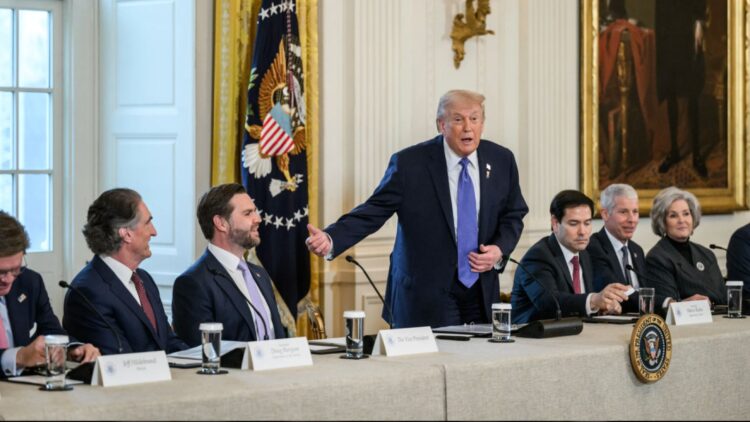
The year 2025 was especially challenging economically for the United States, particularly for its citizens. The sharp increase in tariffs severely impacted domestic trade, as did the high inflation that gripped the country, and finally, the consequences of the government shutdown. Consequently, towards the end of 2025, Donald Trump began discussing stimulus checks of $2,000 per eligible person to address these economic challenges.
The president first floated this idea in 2025
Delving into this “new” proposal from the Trump Administration, the plan involves using a portion of the revenue from trade tariffs to fund one-time payments to taxpayers. It’s worth noting that the president first floated this idea in 2025 and has revisited it several times since. This idea, at first glance, seems to be well-received by the public. The concept of $2,000 stimulus checks has resurfaced as a topic of debate because Trump’s proposal is based on a “tariff dividend,” financed by revenue generated from import tariffs.
Trump dodged the question and pointed out that he had already given a $1,776 bonus
According to data from the Federal Reserve, a large portion of households still struggle to absorb unexpected expenses. In other words, a significant part of the population barely makes ends meet and therefore has no room for savings. Recently, during a meeting with reporters in the Oval Office, when asked about this check, Trump dodged the question and pointed out that he had already given a $1,776 bonus to approximately 1.5 million military personnel before the holiday season, according to the U.S. Department of Defense.
“The money coming in from the tariffs is so substantial that I’ll be able to get to $2,000 at some point” – Donald J. Trump
Regarding this specific check, Trump has said, “The money coming in from the tariffs is so substantial that I’ll be able to get to $2,000 at some point, I would say, toward the end of the year.” In response, economists warn that the mere fact that $2,000 stimulus checks are back in the conversation is a sign that the domestic economy remains under stress, despite macroeconomic indicators. The challenge, experts say, lies in balancing immediate relief with the long-term inflationary impact.
If the proposal moves forward, eligibility could depend on income and tax status
Despite this information, no payments have been approved yet; it is only a proposal under discussion. The White House has not released any further information confirming that there are plans in place for the checks to be distributed by the end of 2026. If the proposal moves forward, eligibility could depend on income and tax status; therefore, several specific requirements will be considered. It is important to note that the tariff stimulus would still require congressional approval. Regarding this, not all legislators are in agreement yet. Conversely, public support could push the issue forward.
Economists have argued that stimulus checks fuel inflation
The feeling that the economy is stagnating is widespread among a large segment of the population, particularly strong among low- and middle-income families, where inflation related to food, housing, and transportation has hit hard. Some experts have openly stated that the $2,000 stimulus checks, intended solely for low- and middle-income Americans, would be funded by the federal government.
Treasury Secretary Scott Bessent recommended that if stimulus checks arrive later this year, Americans shouldn’t spend them. Economists have argued that stimulus checks fuel inflation. Specifically, the last time stimulus checks were officially issued was in 2021, under the Biden administration. “Perhaps we could persuade Americans to save them,” he said during an interview with Fox News last year. As we can see, there are many issues on the agenda in the Oval Office. Ultimately, we’ll have to wait and see how the country’s economy evolves, especially given that the Supreme Court will rule this month on the legality of the Trump administration’s tariffs.