
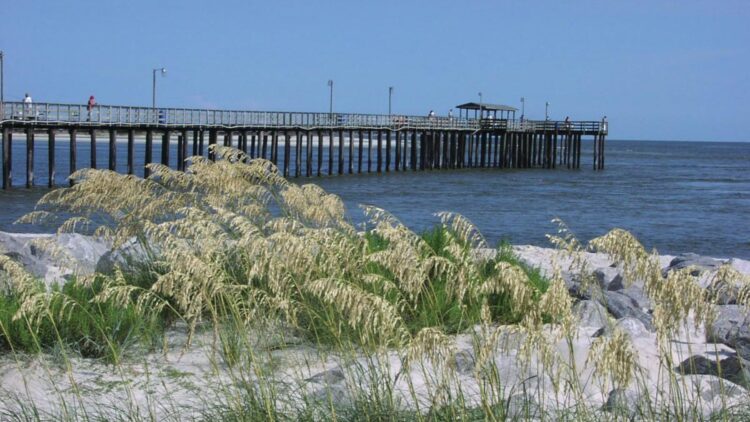
We all love animals, but feeding them can trigger an ecological disaster in the ecosystem we live in—without us even realizing it. This is the dilemma facing the inhabitants of Dauphin Island, located off the coast of Alabama.
This small town is a 14-mile-long barrier. It acts as the first line of defense for Mobile Bay against the Gulf of Mexico. Despite its small size, it is known as “the Amazon of North America” because of the importance of its territory for bird migration. It lies right in the middle of the migratory route of millions of birds crossing the Gulf from Central and South America. In fact, Dauphin Island is the first landfall after flying thousands of miles nonstop. If they do not find safe food there, these birds will surely perish.
Dauphin Island has been officially declared “globally significant” by the Audubon Society. So what is the problem? Well, all the invasive predators that humans are accustomed to: red foxes and cats.
Dauphin Island Oasis
Dauphin Island is not just a tourist beach, but a truly fragile biological sanctuary. Its sands are home to 420 documented bird species—95% of all species in the state of Alabama. During the spring and fall migrations, the island is filled with all kinds of exotic birds seeking rest: warblers, tanagers, orioles, and exhausted hummingbirds.
In addition to migratory species, there are also endangered shorebirds. This is the case of the piping plover (Charadrius melodus), a small endangered bird that lays its eggs directly on the sand, making them very vulnerable.
Although they have no wings and cannot fly, there is another species that gracefully navigates the seas and nests there. The beaches of Dauphin Island are also a lively area for loggerhead turtles, which are federally protected.
Why feeding wild animals can take you to jail
Now that we have provided some context, it is easy to understand that artificially feeding foxes or stray cats can result in a fine of $500 per day and landing behind bars.
After months of debate, the members of the Dauphin Island Municipal Council approved the ordinance on Monday. Feeding wild animals is now completely prohibited throughout the island (not just the nature reserve in the far west). Leaving food out for stray cats and red foxes—which are invasive species that do not naturally belong on the island—creates an imbalance in the ecosystem. Both species cause havoc and hunt large numbers of migratory birds that are too tired to flee in time.
A percentage of residents have been waiting to complain to us. Humans are anthropocentric by nature, and many of the neighbors have simply grown fond of the cats and red foxes that live in the area. This is why they often leave food out for them and give them names, as they consider them to be community pets.
However, these animals are predators that have been artificially introduced to the island by humans, and they wreak havoc on migratory populations. That is why the official authorities on Dauphin Island have decided to nip the problem in the bud and strictly prohibit interaction with these wild animals.
“While it is human nature to want to feed wildlife, studies show that this does them a disservice,” the authorities explained.
Exceptions
Now, the exceptions seem to be bird feeders and the regular feeding of songbirds or hummingbirds. The ordinance also allows for incidental food sources: native plants and approved Trap, Neuter, and Return programs for controlled feral cat colonies. This is provided that no other wild animals are brought in and no protected species are endangered.
If you live on Dauphin Island and have a favorite stray cat… Seriously consider adopting it and making it an indoor cat. Otherwise, it will be very expensive to put a bowl of food on your porch.