
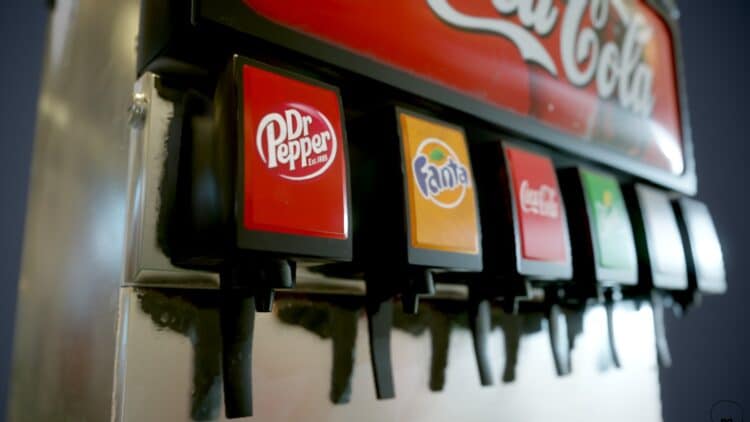
We don’t realize it, but every time we open a can or pour a glass of soda, behind it lies one of the most complex and fascinating corporate battles in modern capitalism. One of America’s most iconic flavors, Dr. Pepper is about to disappear from many public places. Don’t worry, it’s not being banned. However, there are conflicts between companies over the distribution of this product.
It’s ironic that such a sweet and delicious drink is behind one of the most bitter commercial divorces in the soft drink industry.
Dr Pepper vs. Coca Cola
For those who don’t know who owns the second best-selling soda in the United States, Dr Pepper is owned by Keurig Dr Pepper Inc. (KDP), a coffee and beverage giant. Coca Cola distributes Dr Pepper thanks to old distribution and bottling contracts signed decades ago. Thanks to these contracts, Coca Cola had limited rights to sell and serve Dr Pepper through certain specific channels in the country. Over time, Keurig Dr Pepper Inc. has sought to regain full control of its brand in order to manage it uniformly across all points of sale. In other words, they wanted to regain their business independence.
This has led to the legal dispute we are now seeing. So much so that a court ruling was in favor of Keurig Dr Pepper, so now Coca Cola must withdraw its product from the food service venues where it was served. From now on, we will not see Dr. Pepper in soda machines in movie theaters, stadiums, and fast food restaurants for a while.
This is one of the most profitable distribution channels for Coca Cola (it costs them a few cents per cup of soda, while they sell it to consumers for several dollars), so the loss of a best-seller like Dr. Pepper is a serious blow to the company.
Is Dr Pepper disappearing forever?
Before you panic, don’t worry, Dr Pepper isn’t going to disappear from the face of the earth. This whole mess affects Coca Cola and its former license to distribute it in event venues and restaurants with soda machines. Dr Pepper will still be available for sale at retailers and supermarkets. This means you can still buy cans and bottles at retail stores, supermarkets, convenience stores, and liquor stores.
However, if you like to drink Dr. Pepper when you go to the movies or eat at your favorite fast-food joint… you may have to sneak in with a bottle of Dr. Pepper under your clothes or in your bag, because it looks like it won’t be available for distribution for a few weeks.
The Official Replacement: Mr. Pibb to the Rescue
The Coca Cola Company has not been sitting idly by. The beverage company will promote its own similar-tasting alternative to fill the void left in soda fountains. That’s why it will likely be replaced by Mr. Pibb (or Pibb Xtra). This soda claims to be just like Dr. Pepper, but it seems that it hasn’t gone to college or earned a doctorate—just like a chiropractor and a medical doctor.
Jokes aside, Coca-Cola describes the taste of Mr. Pibb as “intensely flavorful, spicy, and with a hint of cherry.” Given how picky the average compulsive carbonated beverage drinker is, we highly doubt that this drink will become the methadone for fervent Dr. Pepper fans, although they have no other choice until the corporate dispute is resolved.
The European Precedent
The dispute with Dr. Pepper has not been an isolated case. The most notable president occurred in Europe last year between Nestea ice cream and Coca-Cola’s own brand, Fuze Tea. For decades, Coca-Cola and Nestlé had a joint venture to produce and distribute Nestea. When this agreement ended in 2024 (in Spain), the assets were distributed in a way that was very confusing for consumers.
While Nestlé retained the brand name (Nestea), Coca-Cola kept the original formula—that is, the secret recipe—and began distributing it under its new brand, Fuze Tea. This caused total confusion among iced tea drinkers, who were faced with a new bottle and name, but a drink that tasted exactly the same as before. It’s amazing what people will put up with in order not to drink water, right? /s