
Christmas dinners and cold winter weather not only bring joy, but also unpleasant odors from the sink and pipes clogged with solidified grease. If you are trying to live a chemical-free life at home, we have an alternative that smells much better and is almost as effective at unclogging pipes.
It’s the viral cinnamon trick, but don’t worry, you won’t have to eat any spoonfuls of ground cinnamon. In fact, you don’t even need to use new cinnamon, just collect the cinnamon sticks you’ve used for cooking and baking delicious treats this Christmas. It’s a totally eco-friendly recipe that reuses kitchen ingredients. In this article, we’ll tell you everything you need to know so you don’t have to call the emergency plumber this Christmas.
Why do pipes smell bad?
The bad smell from pipes does not come from the main sewer, but is due to the accumulation of biofilm: food particles and solidified grease that gradually stick to the inner walls of the pipes and the trap. As they decompose, they release gases that rise and fill our kitchen with an unpleasant smell.
This pipe blockage is caused by solid matter. Even if we have a food waste disposer, plumbers advise against disposing of any solids down the drain. Coffee grounds, spices, and flour stick to the existing grease in the trap, creating a hard, dense mixture that can eventually cause a serious blockage.
Pipe cleaning ritual: easy, cheap, and nice-smelling
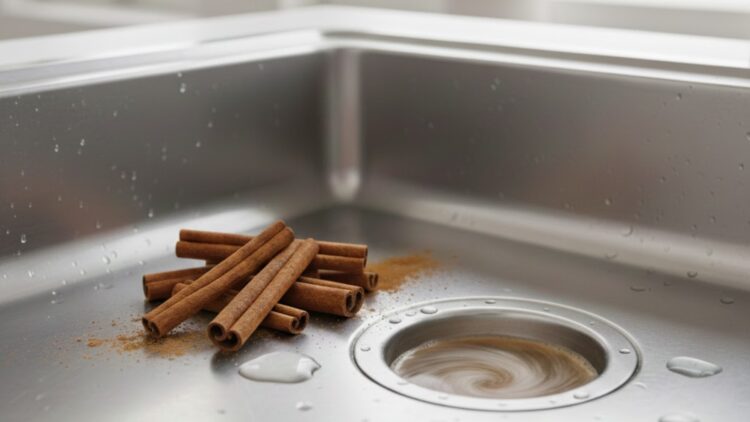
If you’re fed up with bad smells in your kitchen and pipes, we’ve got a method that helps to unblock them and then safely deodorize them. To do this, we need to use whole cinnamon sticks. If you’ve already used them for cooking or baking, you can wash them, take them out, and reuse them for this. What we need is their essential oils, but there’s no need to buy them specifically for this purpose.
First, we must heat the pipes to melt the solidified grease so that the water can wash it away. To do this, we must pour a stream of liquid dishwashing detergent into the drain. Then, slowly pour two electric kettles filled with freshly boiled water—although a large pot of hot water will also work—and pour it slowly down the sink. This step is what really helps to unclog the drain and eliminate the main source of the bad smell.
Although we want to save money on our electricity bill, it is counterproductive to use too little water, and always cold water in the winter months. It is better to make sure that the downspouts are kept clean, as a higher electricity bill will not be cheaper than an emergency visit from a plumber.
Now it’s time to add the aroma. To make the infusion, use the same large pot of water with the reused cinnamon sticks. Boil for about 30 minutes. This slow cooking adds moisture to the environment—ideal if you use the heating a lot. Once the infusion is ready, remove all the cinnamon sticks and pour it quietly down the drain.
The best time to perform this ritual is late at night. This will allow the aroma to linger during all hours of inactivity, maximizing its effect on the siphon.
How to keep our indoor pipes clean during the winter
To ensure that the bad smell does not return, it is best to adopt preventive habits. An ounce of prevention is worth a pound of cure:
- Never pour oil or grease down the drain. Put it all in a sealed container and once it is full, throw it in the trash.
- Use strainers in the drain to catch food scraps before they can enter the trap.
- Since there’s no harsh chemicals involved, you can pour boiling water with soap (from Step 2) once a week to dissolve any small grease buildup before it hardens.
- Although it may seem like an elementary school science experiment, you can pour baking soda and white vinegar down the drain once a month to neutralize and loosen the bacterial biofilm.
So remember, if you want to get rid of bad odors in your home’s drains, you can use this recycled cinnamon infusion. Remember to use cinnamon sticks, never powdered!