
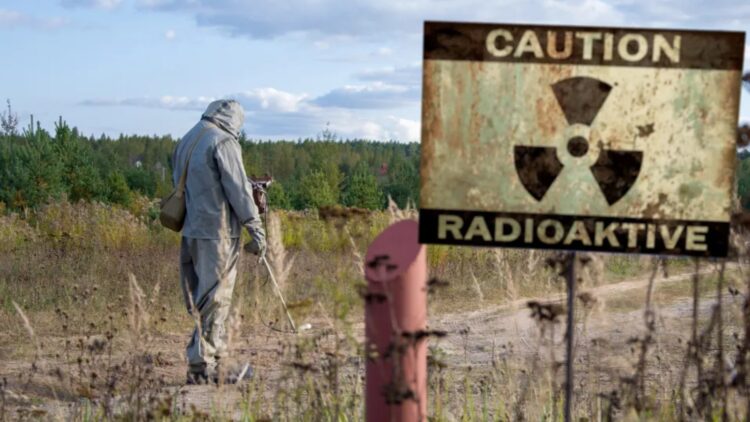
In 1986, the nuclear disaster in Chernobyl released large amounts of ionizing radiation (IR) into the environment, and became one of the most serious disasters related to nuclear energy in history. After the explosion, many people were involved in cleaning tasks and scientists have been wondering about something important: the damage caused to the DNA due to that radiation could be transmitted to the children of the people exposed to this?
A new study, published in Scientific Reports and led by researchers from the University of Bonn (Germany), offers clear evidence for the first time about the possibility of transgenerational genetic effect. So, let’s learn more about this.
What researchers wanted to see
For years, several studies tried to find out if the genetic damage caused by radiation could be inherited. However, the results were unclear. In this research, scientists didn’t just simply look for any new mutation on children. Instead, they focused on something more specific called clustered de novo mutations (cDNMs). Let’s explain this term in simple words:
- “De novo” mutations are new mutations that are not present in the parents.
- “Clustered” means that two or more mutations appear very close together in the DNA.
These clusters can happen when radiation breaks part of the DNA, the body tries to fix that but the repair process may not be perfect and small mistakes can remain. If several of these mistakes appear close together in the DNA, they form a cluster. If such changes occur in reproductive cells, they can be passed on to children.
The researchers found a significant increase in the number of these clustered mutations in children whose parents had been exposed to radiation. They also found a possible link between the estimated radiation dose received by the parent and the number of mutation clusters found in the child.
Study about Chernobyl and other exposed groups
To investigate the genetic effects linked to Chernobyl exposure, the researchers analyzed whole genome sequences from three groups:
- 130 children of Chernobyl cleanup workers.
- 110 children of German military radar operators who were likely exposed to stray radiation.
- 1,275 children of parents who were not exposed to radiation, used as a control group.
After comparing the average amount of clustered de novo mutations in each group, the results showed that:
- 2.65 clustered mutations per child in the Chernobyl group.
- 1.48 per child in the German radar group.
- 0.88 per child in the control group.
Researchers point out that these numbers could be slightly overestimated due to background noise in data. However, even after making statistics adjustments, the difference between groups continued to be significant.
They also found out that, in general, the higher the estimated radiation doses in parents were, the higher the number of mutation clusters in children was found.
Is there a higher risk of disease?
Even though the results may seem worrying, the study offers reassuring information. Researchers didn’t find out that children of exposed parents had a higher risk of disease.
One important reason is that many of the clustered mutations likely occur in “non-coding” regions of DNA. These are parts of the genome that do not directly produce proteins. Since only a small portion of the human genome codes for proteins, mutations in non-coding regions are less likely to cause health problems.
The researchers explain that because the overall increase in clustered mutations is small and because only a limited part of the genome is protein-coding, the likelihood that a disease in the offspring is caused by one of these clustered mutations is minimal.
So, to provide perspective, it is already known that older fathers naturally pass on more DNA mutations to their children. According to the study, the disease risk associated with paternal age at conception is higher than the potential risk linked to the radiation exposure examined here.
Limitations of the study
The radiation exposure occurred decades ago, so scientists had to estimate radiation doses using historical records and older measuring devices. This means the exact amount of radiation each individual received is not known with complete accuracy.
In addition, participation in the study was voluntary. This could introduce some bias, as people who believed they had been exposed to radiation might have been more likely to take part.
To sum up
While radiation from Chernobyl can leave subtle marks in the DNA of the next generation, the overall health impact appears to be limited based on the available data.