
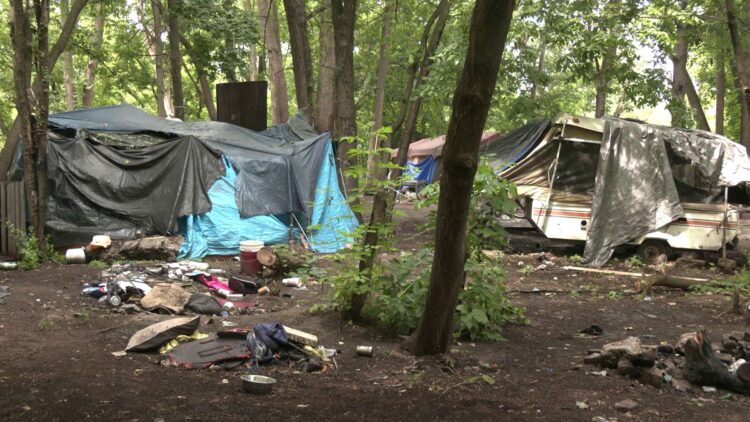
Do you like camping? Well, you might receive a fine if you do it in East Lansing, Michigan. You should be careful because you could even face jail time if you don’t follow the new law that bans camping in public spaces.
You might be wondering what’s the goal behind this law? Reducing public homelessness in the city. However, this has sparked discussion, controversy, and concern among residents. So, let’s see what they have to say about this situation.
What the new law says about camping
The city of East Lansing in Michigan, located about 145 km from Detroit and where you can find the Michigan State University, recently updated an existing ordinance that regulates how people can use public spaces. So, let’s have a look at what the law says:
- Camping is defined as setting up or staying in a place with bedding, sleeping bags, stoves, or cookware for temporary living.
- If someone breaks the rule once, it is considered a civil infraction, which can result in a fine of up to $25.
- If someone is a repeat offender, it becomes a misdemeanor, punishable by up to 30 days in jail and/or a fine of up to $100.
The law applies to many types of public spaces, including:
- Streets, alleys, and sidewalks
- Parks and public plazas
- Parking lots and parking structures
- Public buildings and facilities
- Public restrooms
- Any other place that is publicly owned or open to the public
Why?
The city council passed this ordinance to handle frequent issues about camping in public spaces, mostly in downtown East Lansing. Michigan State University and city officials noted that public camping had become a recurring problem, and the new law is part of an effort to maintain public spaces while supporting residents.
East Lansing officials have emphasized that the law is not meant to punish homeless people, but rather to manage public areas and offer alternatives. The city is also planning to hire a third social worker to help the local homeless population, ensuring that support is available alongside enforcement.
Alternatives and support
City officials discussed other ways to help homeless people during the council meeting. These are some of the alternatives:
- Alternative-giving programs, which have been used successfully in other cities to provide resources in a safe and effective way.
- Donations to charities that support homeless individuals.
The city highlighted the need to provide compassionate and impactful resources for unhoused residents, especially since East Lansing has only one small shelter within city limits, which primarily serves families and children and operates at very limited capacity.
Criticism and concerns
This law that bans camping in public spaces has also been criticized by housing advocates. Khadja Erickson, Executive Director of the Mid-Michigan Tenant Resource Center, stated that the law could be unfair to the homeless population.
Erickson pointed out that if individuals cannot access shelter, cannot stay on private property, and are now prohibited from using public spaces, it raises an important question: Where are they supposed to go?
Critics argue that the law may simply push homeless individuals to neighboring areas, creating additional burdens for surrounding communities, without addressing the root causes of homelessness. They stress that enforcement alone cannot solve the problem.
So…
The new regulation on camping in public spaces in East Lansing aims to reduce homelessness in the city’s downtown area through prohibitions and penalties that can lead to fines and even jail time for repeat offenders. But, do you think this is law is a good idea for this situation?