
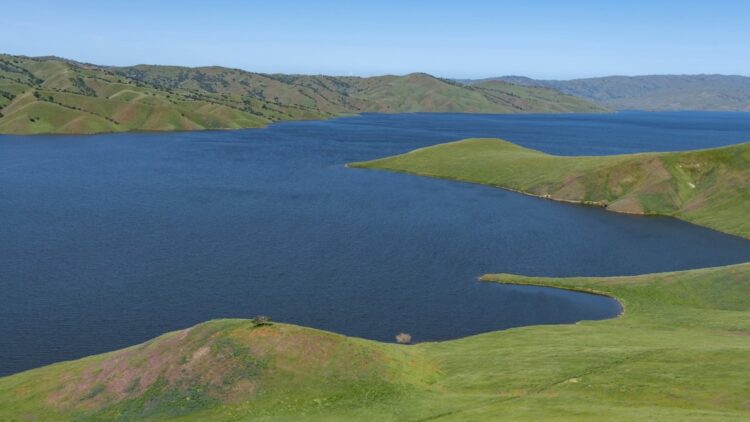
California is about to build its largest new reservoir in almost 50 years, called Sites Reservoir. In January, the Donald Trump Administration officially approved the project that will cost about $7 billion and it could store up to 1.5 million acre-feet of water, enough to supply 24 million people, from the Bay Area to Los Angeles, as well as farmland in the Central Valley.
As you can imagine, this project has supporters and people criticizing it, so let’s learn more about this reservoir in California.
The Sites Reservoir
This will be built in a rural valley from Colusa County, in the northeast of Sacramento. Opposite to many traditional reservoirs that block rivers, this will be an off-stream reservoir, which means it will store water pumped from the Sacramento River during large winter storms.
The planned reservoir will be roughly 13 miles long, flooding around 13,000 acres behind a system of dams and smaller dikes. Water stored in the reservoir will be released back into rivers when levels are low, helping cities, farms, and the environment.
Planners say that with 1.5 million acre-feet of storage, Sites would be the eighth largest reservoir in California. It is expected to supply water for urban customers and about 200,000 hectares of farmland in the Central Valley.
Supporters of this California project
California has experienced three major droughts since 2007, leaving brown lawns and forcing millions of people to reduce water use. Officials argue that new storage is one of the few ways to manage these swings between floods and droughts.
Andrea Travnicek, assistant secretary at the U.S. Department of the Interior, said the approval reflects years of study and public review and “lays the foundation for construction through strong partnerships that will ultimately result in additional water supplies for California.”
Also, Jerry Brown, executive director of the Sites Project Authority, called the approval a key milestone after decades of planning. He said the reservoir could reliably capture and store water in wet winters, “benefiting both people and the environment.”
Environment and criticism
Not everyone agrees that a new reservoir is the right solution. Environmental groups warn that diverting more water from the Sacramento River could harm fish and wildlife in the Sacramento-San Joaquin Delta.
Keiko Mertz, policy director at Friends of the River, described Sites as “a nearly seven-billion-dollar gamble that delivers little water at enormous cost, threatens rivers and fisheries, and distracts from real solutions.” She and other groups argue that California should focus on water conservation, groundwater recharge, and smaller local projects before building another large dam.
In 2024, environmental organizations sued to overturn the state environmental review, but a judge allowed the project to move forward.
Costs, permits, and labor disputes
The cost of Sites Reservoir is now estimated between $6.2 billion and $6.8 billion, due to updates in design, construction inflation, pandemic-related factory shutdowns, and tariffs from the Trump era. These costs may eventually affect water rates.
Most of the funding will come from 22 partner water agencies, with the state committing $1.1 billion in bond funding through the California Water Commission. Federal agencies have also shown support, including a $2.2 billion loan offer from the EPA.
Even with federal approval, the project still needs key water rights from the State Water Resources Control Board. Labor unions have raised objections to the selection of Montana-based Barnard Construction, urging officials to favor companies with stronger union ties.
So…
Is this the long-term solution California needs, or is it a costly risk at a time of climate uncertainty and financial pressure? What happens next will help define how California manages its most essential resource: water.