
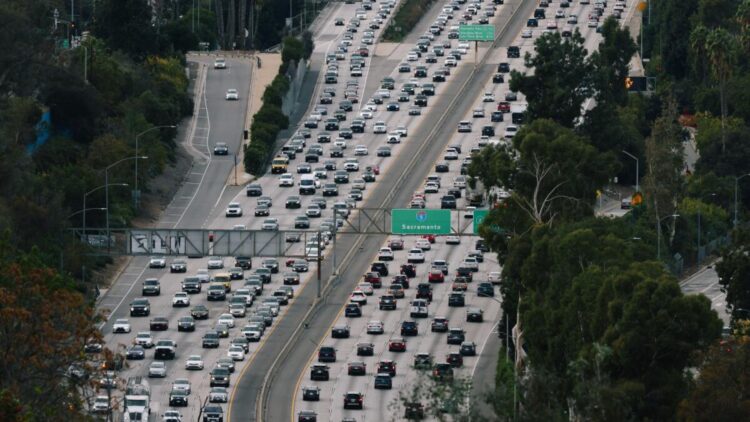
Los Angeles is best known as the birthplace of Hollywood, but also for the traffic and miles of gridlock that residents endure daily. With a population of nearly 4 million, the city is congested by the immense number of vehicles and people moving throughout the city all day long. Now, a bill is being planned to help reduce this type of driving: a congestion charge that drivers across California would pay.
This bill will be introduced to require fines for drivers who fill every available space on the freeway
According to experts, congestion pricing appears to be the only academically proven way to reduce traffic congestion. Metro’s traffic reduction study focuses on high-traffic areas such as DTLA and West Los Angeles/Santa Monica. While various laws have been proposed, including the creation of public transportation systems, road expansions, and gasoline taxes, congestion pricing has been confirmed as the only effective way to address freeway congestion. Therefore, this bill will be introduced to require fines for drivers who fill every available space on the freeway.
The city of Los Angeles has long struggled with congested roads, often leading to traffic jams, pollution, and frustration among drivers
The main goal of this proposal is to reduce congestion, improve safety, lower emissions, and reinvest in communities by using surplus revenue to expand high-quality rapid transit options. The city of Los Angeles has long struggled with congested roads, often leading to traffic jams, pollution, and frustration among drivers. This has been a serious problem affecting California’s roads and could persist if no action is taken. Metro’s Traffic Reduction Study explores how pricing strategies and better transportation options can reduce congestion, improve safety, lower emissions, and reinvest in communities. Recommendations include managing travel demand, expanding mobility options, and supporting low-income drivers, as stated on the study’s website.
Metro explains what happens on Los Angeles roads through the law of supply and demand
According to a critical perspective, slow traffic can be controlled with appropriate pricing. The proposed congestion pricing would charge vehicles for entering or driving through designated high-traffic zones during peak hours, replicating models already implemented in major cities like New York, Singapore, London, and Milan. Vehicle owners would have no choice but to avoid excessive use of these roads. Typically, with congestion pricing, drivers would ensure they don’t spend too much time on the road. Metro explains what happens on Los Angeles roads through the law of supply and demand. When we get stuck in traffic, it’s because the number of people in cars who want to use the road (demand) is greater than the available space (supply).
The Traffic Reduction Study will explore a new approach to the traffic problem
The key takeaway for the creators of this measure is that California’s congestion charge plan is not a war against vehicle owners, but rather a regulatory way to ensure that all cars travel at a moderate pace without clogging the roads. The exact rates for the new project have not yet been determined; however, projections indicate that the DTLA concept could generate more than $9.5 billion in net revenue over 20 years.
According to available data, this measure, if approved, could be implemented by 2028. In fact, Vision 2028 involves efforts and projects that encompass all aspects of our transportation system, Metro explains. It is important to note that the study also considers equity measures to ensure that low-income communities are not disproportionately affected. Furthermore, the Traffic Reduction Study will explore a new approach to the traffic problem. Finally, among the proposed strategies are discounted fares and the implementation of a “mobility wallet” concept, which would provide a dedicated transportation budget for eligible residents to use on public transport, taxis, tolls, and other fares.