
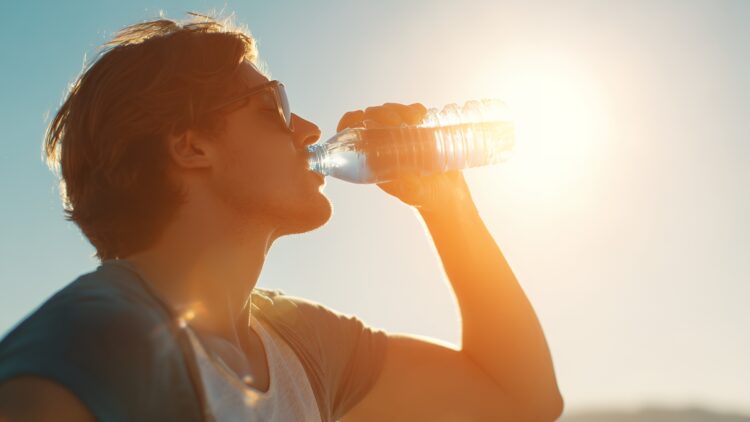
Humans can go weeks without eating, but 48 hours without drinking water can be fatal. Not only does water keep us hydrated, it also helps transport nutrients, aids digestion, and allows our bodies to eliminate toxins through urine. Water is life.
However, not all the water we drink is healthy. Although we believe that bottled water is the healthiest—since we can buy bottled water from mineral springs anywhere in the world—many doctors advise against drinking bottled water if we can avoid it.
One of the biggest advocates of tap water is Dr. Isabel Viña, one of the most prominent figures in medical outreach in Spain. She is also the medical director and co-founder of IVB Wellness Lab, a laboratory that develops nutritional supplements. She was recently interviewed on The Wild Project podcast, one of the most popular Spanish-language podcasts with 7 million subscribers worldwide.
Bottled water, a danger in disguise
Dr. Isabel Viña did not hesitate when asked about plastic bottles: they act as hormone disruptors that can be harmful to the body. As an alternative, she suggests buying water in glass bottles or trying to drink tap water. She herself always drinks tap water, unless you live in a place without drinking water.
When asked about the dangers of calcium buildup, she admitted that this is often necessary, so hard water can even be beneficial to our diet.
Although plastic bottles seem harmless, they have been shown to be hormone disruptors that can be a problem, especially for people who want to become parents soon or simply want to maintain balanced hormone levels. The chain of ultra-processed products has been studied time and time again, and the presence of microplastics and BPAs is staggering.
The situation is not improved when we use water bottles that are past their best-before date, reuse them, or expose them to the sun. Exposing them to UV rays or high temperatures—as often happens in summer—accelerates the degradation of the plastic and increases the migration of chemicals into the water we drink.
Dr. Isabel Viña urges people to drink tap water because water in a plastic bottle is in contact with a surface that is not inert (unlike glass), meaning that substances are being released.
In addition to health complications, bottled water consumption has a significant environmental cost. According to recent reports, more than 500 billion plastic bottles are produced each year. Due to a lack of adequate infrastructure, those produced in third world countries end up in landfills or the ocean.
People against tap water
However, the arguments against have made us wait; many have accused Dr. Isabel Viña of being overly optimistic about the quality of water in many areas of the planet. After all, water that is too hot causes kidney stones. Ultimately, the city’s water system is also transported through plastic pipes, which makes worrying about plastic bottles laughable.
In areas where the water is extremely hard, drinking tap water would be equivalent to losing your kidneys in record time. In the United States, tap water can contain contaminants such as lead, disinfectant byproducts, and PFAS, especially in rural communities or those with very old water infrastructure.
If plastic bottles are endocrine disruptors, chlorination of water is not entirely harmless either. There are scientific reports that discuss the association of long-term consumption of chlorinated water with an increased risk of cancers—such as bladder and colon cancer—and reproductive problems due to trihalomethanes (THMs).
Water fluoridation is also quite controversial, as possible links are being seen between children’s IQ and fluoridated water intake during pregnancy. For now, it seems that any type of water consumption has its pros and cons. The only thing we know for sure is that drinking any type of water is still healthier than drinking only soda.