
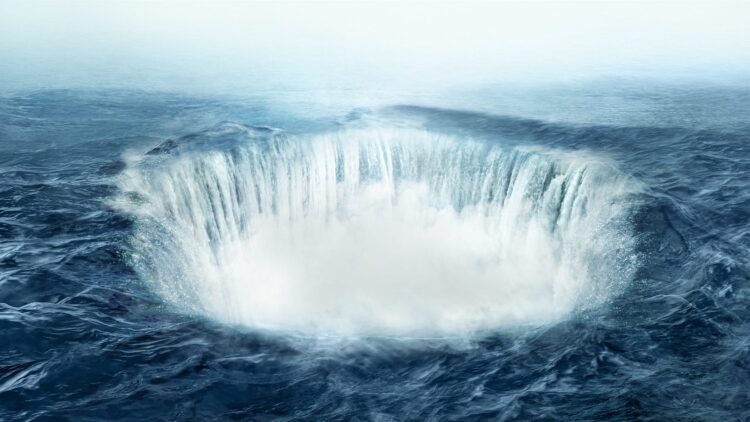
Scientists believe a massive underwater pocket of fresh water off the East Coast, which is large enough to support a place like New York City for 800 years, probably originated during the last ice age while glaciers covered the area.
Early test results indicate that this aquifer, which sits under the seabed and looks like it runs from New Jersey all the way up to Maine, got trapped in the cold about 20,000 years ago, suggesting heavy ice sheets from the last glacial period helped create it.
In search of freshwater: Expedition 501
During the past summer, a scientific team launched a mission to investigate old findings from the 60s and 70s that claimed fresh water was hiding under the Atlantic seafloor. Brandon Dugan, a geophysics professor at the Colorado School of Mines who helped lead the trip, told Live Science that the undertaking was huge and fulfilled a personal ambition he had held for a long time.
The three-month mission, called Expedition 501, pumped up about 13,200 gallons of water from below the seabed at three different spots near Nantucket and Martha’s Vineyard.
Although the final numbers aren’t in, it currently looks like the deposit reaches deeper than old reports indicated, which means it could be larger than we realized. Dugan says the team also has a good idea of how the reservoir formed, based on early testing of isotopes, noble gases, and radiocarbon dating.
A reservoir that has been in the backburner for decades
The U.S. Geological Survey first spotted fresh water in the area 60 years ago while checking for fuel and mineral resources between Florida and Maine.
Dugan pointed out that stumbling upon fresh water inside ocean sediment was a pretty weird discovery at the time. He added that USGS researchers developed some theories in the 1980s about how the water arrived, but the topic eventually faded away and people stopped discussing it.
How could a freshwater reservoir like this form?
Back in 2003, Dugan and Mark Person, a hydrology professor at the New Mexico Institute of Mining and Technology, dug up those old files and developed three theories on how fresh water ends up under the sea.
One possibility is that sea levels stay low for a long time, allowing rain to soak deep into the soil.
Dugan explained that when the oceans eventually rise over hundreds of thousands of years, that fresh water gets locked inside the sediment below. He noted another option where high mountains near the coast force rainwater deep into the seafloor from their elevated peaks.
The third idea is tied to the first one and suggests these reservoirs can develop when growing ice sheets cause sea levels to fall.
As the ice grinds against the bedrock, the friction creates heat that melts the ice and lets water pool at the bottom.The intense weight of the glacier then drives that water into the earth, sealing it under layers of sediment.
Trying to solve the puzzle
Over twenty years later, the team is nearly sure of the origin, as early results show glaciers likely provided most of the water during the last ice age.
Dugan mentioned that they basically crossed huge mountains off the list for New England since the coastline there doesn’t have any major peaks. Still, he noted that some rainwater is likely mixed in with the glacial melt. He explained that because it rains right in front of glaciers, the final result is probably a combination of sources.
Currently, the team is looking closely at things like microbes, rare earth elements, and gaps in the sediment—which act like storage pockets—to better gauge how big the reservoir is and pinpoint exactly when it was created.