
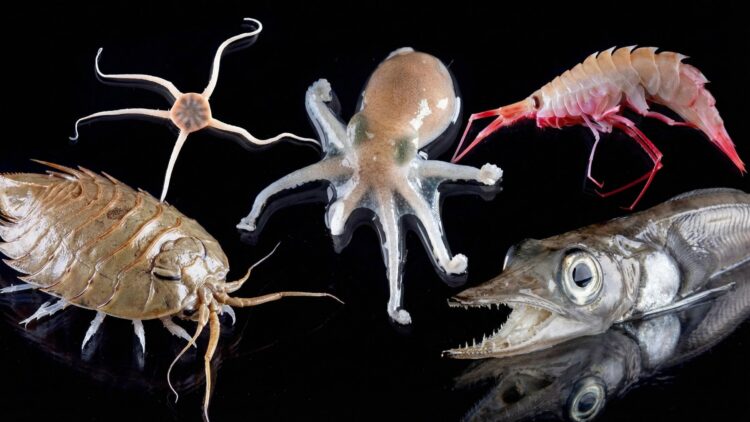
A research trip to Antarctica uncovered marine life that hadn’t been seen before in one of the world’s most remote spots. Researchers were especially drawn to the find because the creatures had such odd physical features.
The breakthrough happened during a study mission on the continent and was shared with the global science community by the Australian Broadcasting Corporation (ABC). Specialists pointed out that these species are new to modern science. Apparently, no matter how obsessively we try to catalogue and map every square inch in this planer, The Earth still has some surprises up her sleeve for us humans.
But what have scientists found down there? The species recently discovered seems to have been pulled out of a Julius Verne book illustration. Here are some of the species:
Arthropods(Crustaceans & Sea Spiders)
Although actual trilobites vanished over 250 million years ago, the Southern Ocean hosts a living double: Ceratoserolis trilobitoides. These creatures sport a hard, segmented shell that acts as armor against anything trying to eat them. This isopod takes a long time to mature and only breeds once. The females carry eggs in a pouch, or marsupium, where the babies grow for almost two years before venturing out on their own.
Eusirus perdentatus: These amphipods are little shrimp-like crustaceans that live on the Antarctic seabed. They are meat-eaters, snacking on marine worms, other amphipods, tiny crustaceans, and various scraps of organic waste.
Colossendeis: Antarctic sea spiders can get surprisingly big, thanks to something known as polar gigantism. Even though they look like spiders and share the name, they aren’t actually related to the ones on land; fossils show they evolved millions of years before land spiders even existed. The sea spider soaks up oxygen right through its outer shell, meaning it basically breathes with its legs! This particular one measures around 20cm across.
Worms
The Eulagisca gigantea is one of the weirdest animals down on the ocean floor, famous for a flat body decked out in decorative scales known as elytra. This specific big Antarctic worm sports a shiny gold “coat,” making it one of the fancier residents of the deep. Its dining style isn’t quite as elegant, though: when it hunts, a retractable snout shoots out, making the worm look like it has huge jaws with fangs.
On the other hand, with over 500 known species, Nereidid worms make up one of the most common families of polychaetes. You can find them living in all sorts of different ocean environments. This specific worm is a great example, showing off the bristle-covered side segments known as chaetigers.
Echinoderms
The Ophionotus victoriae (also known as the Victoria brittle star) features five thin arms that can stretch out to about 10cm across. Acting as both a hunter and a scavenger, it eats a mix of invertebrates (like krill), drifting organic waste, and sometimes even young brittle stars. This creature is able to grow back missing limbs much more quickly than other echinoderms can.
Antarctica Fish
Jonah’s icefish (formally known in the scientific community by its Latin name Neopagetopsis ionah) is famous for how well it handles the extreme cold. Unlike most vertebrates, it doesn’t have hemoglobin, which means its blood is practically clear. It depends on the oxygen dissolved in its plasma to fuel its body, allowing it to flourish in the freezing, oxygen-heavy waters of the Southern Ocean.
Molluscs
The Pareledone is a group of octopuses that exists exclusively in Antarctic waters. These creatures live on the seabed, ranging from the shallows all the way down to 4,000 meters deep. One member of the group, Turquet’s octopus, helped scientists solve a puzzle that had confused them for a long time. Genetic studies showed that separate populations from the Weddell, Amundsen, and Ross seas interbred 125,000 years ago, proving that the West Antarctic ice sheet melted during the last warm spell, when the climate was much like ours is now.