
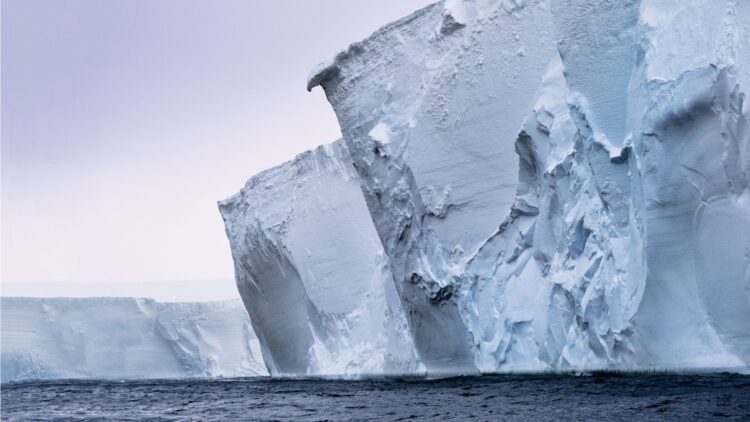
A group of scientists has proposed building something to slow the melting of the ‘’Doomsday Glacier’’: an 80-kilometer underwater wall. This glacier is actually called Thwaites Glaciers and it’s located in West Antarctica.
The eason behind this proposal is that the glacier is melting faster than expected, which can affect sea level in the entire world. So, let’s find out more about this situation.
Thwaites Glacier
This glacial mass is losing ice at a very high speed because of the increment of the air temperature and warmer ocean water. Relatively warm ocean water is flowing underneath the glacier and melting it from below. When ice melts from its base, it becomes weaker and more unstable.
Thwaites Glacier is particularly important because it is responsible for about 4% of the world’s annual sea level rise, and if it were to collapse completely, it could raise global sea levels by around 65 centimeters. This amount of sea level rising would greatly increase the risk of flooding in coastal areas where millions of people live.
80-kilometer underwater wall
The wall scientists want to build is not a traditional wall we can see on land, but a flexible underwater curtain that would:
- Stretch approximately 80 kilometers in length.
- Reach about 152 meters in height.
- Be anchored to the seabed.
The purpose of this barrier would be to block warm ocean currents from reaching the base of the glacier. By reducing contact between warm water and ice, scientists hope to slow down the melting process.
It is important to note that this structure would not stop climate change. However, it could help reduce the speed of ice loss and potentially limit future sea level rise.
How would this current ocean block work?
It’s simple: act as a physical object. The barrier would stop warm ocean water from reaching directly to the glacier base. By reducing the contact between warm water and ice, it’s expected to lower the speed the glacial mass is melting and help stabilize one of the most vulnerable parts of the glacier.
Before any construction could begin, scientists propose an initial three-year research phase. During this time, they would focus on:
- Identifying suitable materials.
- Designing the structure.
- Testing prototypes.
New research inside the glacier
While scientists are studying this possible solution, they are obtaining new data directly from the inside of the glacier. To do this, they are drilling into the ice using hot water to create deep holes, where they insert scientific instruments nearly 1,000 meters below the surface. These instruments are used to see what is happening where the ocean meets the bottom of the glacier.
By studying this information, researchers can figure out why Thwaites Glacier is losing ice so quickly. This knowledge is very important. It helps scientists decide whether the proposed underwater barrier could actually slow the melting — and if so, how it would need to be built to work properly.
So…
Researchers are working hard to better understand what is happening beneath the glacial mass. The more they learn, the clearer the picture becomes.
This story is not just about ice in Antarctica. It is about rising seas, coastal cities, and the lives of millions of people. What happens there could shape the future in ways that affect us all. We’ll see if that 80-kilometer underwater wall becomes a reality or not.