
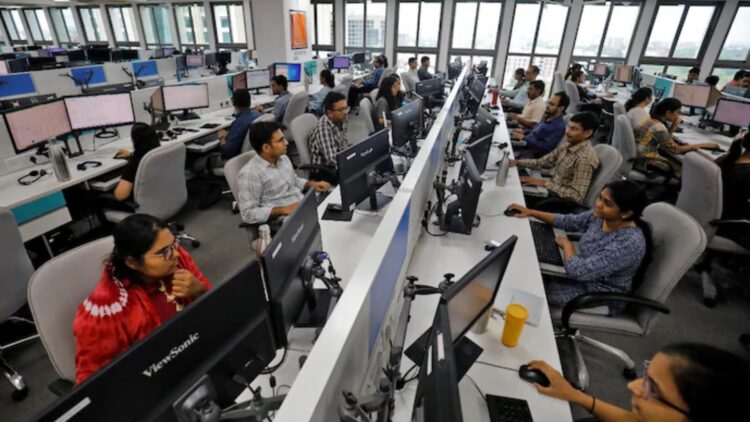
In the last few years, many people have been wondering whether artificial intelligence (AI) is going to replace us when it comes to jobs, mostly in the technological field. However, today we are going to focus on a new study, made by the Indian think tank Council for Research on International Economic Relations (ICRIER), that analyzes this concern in India’s IT services industry. So, let’s find out what the results are.
Artificial intelligence and jobs
The study, titled ‘’AI and Jobs This Time Is No Different’’, analyzes how artificial intelligence is affecting India’s IT services industry. To reach conclusions, ICRIER made a survey in which 651 companies of this field took part, and some industry leaders were also interviewed.
The principal concussion is that AI’s effect is similar to the one seen with other major technologies in history. Every time a new technology appears, people tend to be worried about their jobs at the beginning. However, with the passage of time, technology increases productivity, reduces cost, and generates new products and services. This, according to the study, ends up creating new job opportunities.
AI impact in jobs in India
Although hiring has slowed — and even stalled among the four largest outsourcing companies — employers are still actively seeking specific types of workers. The strongest demand is for:
- Software analysts.
- Software developers.
- Mathematicians.
These roles are considered highly exposed to artificial intelligence, meaning they are the kinds of jobs people often assume artificial intelligence could replace. However, the study interprets this trend differently. It suggests that artificial intelligence is mainly acting as a complement to high-skilled technical work, rather than a substitute.
Most firms surveyed reported significant productivity gains after adopting artificial intelligence. These gains included:
- Higher output.
- Better-quality work.
- Time savings.
- Cost savings.
When asked about future hiring expectations:
- 27% of firms believe their workforce will shrink because of artificial intelligence.
- 28% expect to hire more workers.
- 44% expect no major change.
However, more than half of the companies stated they expect to slow hiring for entry-level positions. The study has already observed a general moderation in early-career hiring. This suggests that while experienced professionals may benefit from artificial intelligence tools, those just entering the job market could face more challenges.
New AI-focused companies
The study also points out that most technologies that generate more impact create jobs that didn’t exist before. According to the study, it’s probable that the most important jobs related to artificial intelligence start at new companies that haven’t been founded yet or that are currently being formed in classrooms or garages.
While some established companies are expected to survive and succeed in the artificial intelligence era, the study suggests that new firms focused specifically on artificial intelligence are most likely to disrupt existing businesses and generate a large share of future employment.
Because India has one of the world’s largest pools of AI-skilled workers, and because global demand for AI-enabled products is expected to expand rapidly, the study expresses optimism about India’s long-term job prospects.
Warnings and concerns
Despite this optimistic tone, the study also suggests the Indian government and companies shouldn’t assume the technological industry will automatically adapt to the arrival of artificial intelligence. Let’s find out why:
- Policy and regulatory uncertainty surrounding artificial intelligence is still a concern.
- IT firms are not hiring enough workers with skills in large language model operations.
- Many new labor market entrants lack sufficient AI skills.
- Companies are not expanding research and development divisions sufficiently.
- Investment in training and upskilling is inadequate.
- There is a shortage of qualified AI trainers.
So…
What should you take away from all this? The key question is not whether artificial intelligence will eliminate work altogether, but how workers, companies, and governments will adapt to the changes it brings.