
Today we are going to talk about an investigation warning that in a great part of the African continent, extreme heat may stop being occasional and become a regular part of everyday life.
Until now it was very difficult to calculate exactly how serious the dangerous temperatures issue was, because most global climate models weren’t able to reflect well enough the local conditions that shape weather patterns across the continent: humid tropical forests, dry savannas, and fast-changing agricultural regions. So, let’s learn more about this study.
What researchers did
The study shows that the risk of heat in the African continent doesn’t just depend on the increase of global temperatures due to polluting emissions, but also on what happens on land: especially deforestation and the expansion of cropland.
Researchers analyzed 10 different climate models instead of relying on just one. They adjusted these models to make them coincide with real data observed of heatwaves, including how often they occur, how long they last, how intense they are, and when they happen.
What’s more, they used artificial intelligence to measure how each factor influences heatwaves. Among these factors we can find:
- Air temperature
- Humidity
- Soil moisture
- Wind
- Solar radiation
- Land use
The researchers compared two possible futures: one where pollution remains high and another where governments reduce carbon emissions.
The future of the African continent
The researchers compared two possible futures: one where pollution remains high and another where governments reduce carbon emissions.
Their findings show that by the period between 2065 and 2100, many parts of Africa could experience heatwaves on 250 to 300 days per year. Basically, extreme heat would become a normal part of the climate.
In some areas on the western side of southern Africa, heatwaves could become twelve times longer and more frequent than they are today — even if global emissions are reduced. Many of these heatwaves could last more than 40 consecutive days.
Forests and land
Something researchers found out was that forests help cool the air. They act as a natural system that regulates temperature and humidity, so when forests remain intact, heat and humidity generally stay below extremely dangerous levels. However, when forests are cut down and replaced with cropland, crops release large amounts of moisture into the air and humidity increases causing heat to build up more easily.
The study also identifies what researchers describe as a “deadly threshold.” This is a specific combination of temperature and humidity that can quickly intensify heatwaves, particularly in areas dominated by cropland. For example, in parts of West Africa, extreme heat could peak at temperatures around 26.5°C to 26.8°C combined with humidity levels of 74% to 75%, producing heatwaves lasting 30 to 35 days. In southeastern Africa, even slightly lower temperatures combined with high humidity could trigger dangerous conditions.
Impact on communities
If heatwaves become almost permanent, the human body won’t have enough time to recover because this change would mean a totally different way of living for the people in the continent.
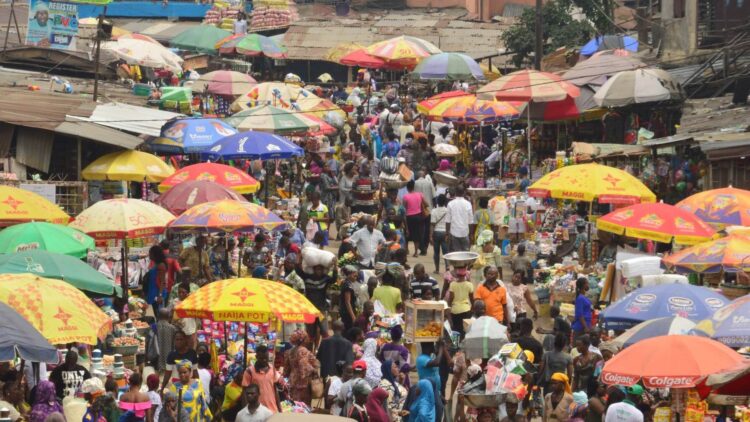
Ruler communities, especially smallholder farmers who work outdoors, are highly exposed. Many have limited access to cooling systems, healthcare, or infrastructure designed to handle extreme heat. Also, urban areas face risks since informal settlements often lack trees and vegetation, and homes built from materials like metal are harder to cool. So, without shade, heat builds up and remains trapped.
So…
Countries may not be able to control global warming alone, but they can influence how their land responds to it. Keeping forests and maintaining natural vegetation can act as a protective shield, helping reduce the growing risk of extreme heat across the continent.