
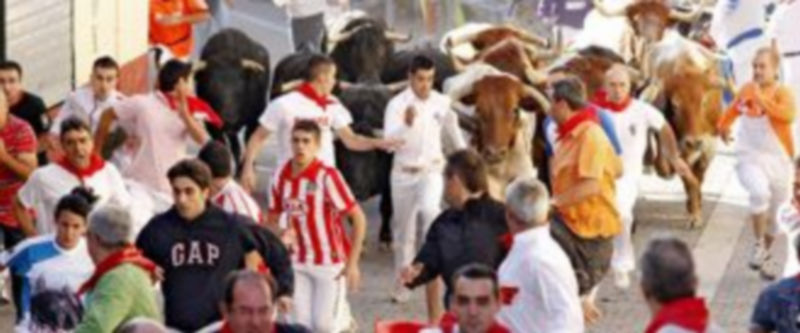
Las reses de la ganadería salmantina de Adelaida Rodríguez abrieron el ciclo de encierros de 2011 en la villa con un encierro rápido y que transcurrió sin incidentes.
A las 8.00 de la mañana con enorme expectación se vivía en los corrales junto al Cega la suelta de las reses de este primer encierro. Un suelta que resultó peligrosa por la separación de la manada con los bueyes por delante. Complicado fue el traslado de las reses por los pinares donde estas se separaron y obligaron a los caballistas a emplearse a fondo para agruparlas con los mansos. Dificultades que se vieron agravadas por la maleza existente en el pinar.
Ya fuera de los pinares la manada se mantuvo agrupada y permaneció mucho tiempo en el descansadero previo al Embudo donde llegó antes de lo habitual. La bajada del Embudo fue rápida y en la entrada a la villa una de las reses cayó y quedó rezagada realizando el recorrido por detrás del resto de la manada que corrió rápida hasta el coso taurino.
En las calles el encierro gustó al público que tiempo antes de la llegada del encierro ya abarrotaba las cales y talanqueras, y gustó también a los corredores a los que permitió realizar bonitas carreras.
Desde la Peña El Encierro, su presidente, Álvaro Herguedas, señaló que el encierro había sido relativamente tranquilo, con un toro descolgado con los consiguientes riesgos. Afirmó que fue un buen encierro “” no hemos empezado mal, ha sido un buen comienzo y a ver si seguimos así todas las fiestas”.
En las calles el baile de Rueda previo al encierro contó con numerosa participación y fue amenizado por “A por ellos” y la Peña La Plaga.
Enfermería
La enfermería de la Plaza de Toros atendió tras el encierro a una persona mayor que sufrió una caída de la talanquera. El cirujano jefe de la Plaza de Toros de la villa, Pablo Vázquez, señaló que se le envió al Hospital General de Segovia para realizarle una radiografía por una posible fractura de una costilla. También a tendieron un par de contusiones y en la suelta de las reses de los corrales del Cega atendieron también a una persona que sufrió una contusión en un tobillo por la pisada de un caballo.
Homenaje
Las Asociaciones y peñas taurinas de la villa descubrieron ayer una placa en la puerta de la enfermería de la Plaza de Toros con la que se homenajea al que fuera cirujano jefe del coso hasta 2010, Teófilo Nieto.
Francisco Salamanca, de la Peña Taurina El Encierro, abrió el acto destacando las cualidades de Nieto y su larga trayectoria vinculado a la Plaza de Toros de la villa. Subrayó su calidad humana que le hace merecedor de este homenaje póstumo. “Recordar a un hombre que lo fue todo en la cirugía taurina, lo fue todo como médico y lo fue todo como persona”, afirmó Salamanca.
El Encierro aprovechó para hacer entrega a sus hijos, presentes en el acto, del Trofeo al Detalle Taurino de la Feria Taurina de 2010, que le fue concedido antes de su fallecimiento.
Sus tres hijos fueron después los encargados de descubrir la placa que reza : “En memoria a Teófilo Nieto Martín, cirujano jefe de la Plaza de Toros de Cuéllar, siempre “Ángel de la Guarda de Corredores y Toreros””
Retransmisión
Por tercer año los cinco encierros de la villa, en su recorrido campestre y urbano, pueden seguirse en directo desde las 9.00 horas de la mañana a través de La Siete de Castilla y León Televisión. Además el festejo también se puede vivir en tiempo real a través de la web oficial de la cadena: www.rtvcyl.es. Por otro lado aquellos que no puedan seguir la retransmisión en directo podrán hacerlo en diferido hasta el jueves 1 de septiembre.
