
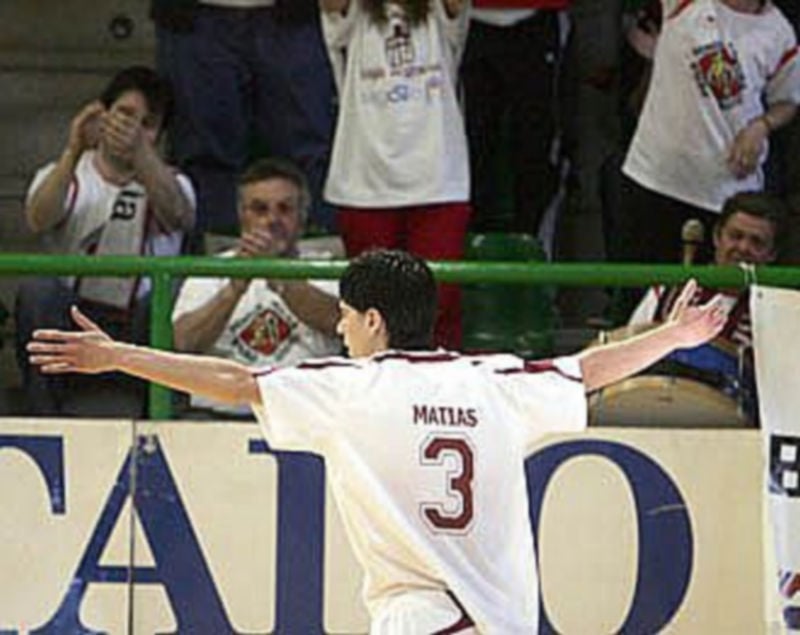
Hay partidos en los que la entrada debería valer la mitad, y ayer los más de mil aficionados que se dieron cita en el pabellón Pedro Delgado para ver el partido que disputaron Caja Segovia y Marfil Santa Coloma deberían haber pasado por taquilla para que se les devolviera la mitad de lo abonado. Y sólo la mitad por aquello de que el Caja Segovia ganó el partido, que si lo llega a perder frente a este rival habría sido para llamar al ya famoso “tío la vara” que ha hecho popular el humorista José Mota.
Varetazos aparte, el Caja precisaba ganar ante un oponente que también necesitaba los puntos, aunque por una razón bien distinta, y por ello el partido se presumía duro y complicado. Afortunadamente, a estas alturas de la temporada la diferencia entre segovianos y colomenses es tan grande que al Caja le bastó con apretar un poco el acelerador en los momentos puntuales del partido para acabar con las ilusiones del grupo de jugadores que entrena Padú, muy agresivos en la presión, pero con escaso acierto con el balón en los pies.
Durante la primera mitad el Caja Segovia se movió al ritmo que le marcó Matías, que hizo lo que quiso con la defensa rival, marcando el primer y el tercer gol de los locales, en los que el portero Cala pudo hacer muchísimo más, y lanzando a su equipo en los contragolpes. El Marfil Santa Coloma, que se encontró muy pronto con un gol en contra, reaccionó hasta empatar el partido a uno tras un desajuste local en la defensa del portero-jugador, pero no pudo evitar marcharse al descanso con una desventaja de dos tantos, que pudieron haber sido más de haber estado los de casa un poco más acertados en las contras.
Miguel Rodrigo vio el partido tan sencillo tras los primeros veinte minutos, que en el inicio del segundo período le dio la oportunidad a Guga de demostrar que aún puede ser importante para el equipo en la recta final de la competición. Pero el brasileño ya no está mentalmente en el Caja Segovia, y sus minutos en la cancha así lo dejaron patente. Tanto se notó su falta de motivación que tras el 3-2 logrado por el Marfil, Miguel Rodrigo lo sentó en el banquillo para no volver a sacarle a la cancha.
Todo lo contrario que ofreció Guga en la pista lo dio Kensuke en los minutos que participó en el juego. Totalmente adaptado a la filosofía del equipo, el japonés del Caja ya no es sólo el cambio exótico, sino que aporta velocidad a las acciones y descaro en el uno contra uno, por lo que su presencia en la cancha siempre ofrece variantes ofensivas al equipo, al igual que Matías, que se encuentra un punto por encima del resto.
Dos zarpazos de Nano Modrego, el primero tras un gran robo de Andreu y el segundo de un zapatazo desde once metros, pusieron al Caja de nuevo con una diferencia cómoda en el electrónico. Tan cómoda era la renta que los de Miguel Rodrigo pensaron que el partido ya estaba hecho, y le cedieron al Marfil toda la iniciativa, tanto en defensa, porque la presión catalana obligó a los locales a desprenderse sin miramientos del balón en muchas ocasiones, como en la ofensiva, aunque en este apartado el equipo de Padú mostró unas grandísimas carencias.
Así que entre unos que no quisieron y otros que no pudieron, los cinco últimos minutos del partido fueron un suplicio del que sólo se salvó el gol de Cidao, logrado desde su propio área, que rubricaba así la importante victoria del Caja. En esta ocasión el espectáculo será ver la clasificación, y comprobar que el equipo está muy cerca de volver a luchar por el título de Liga.
