
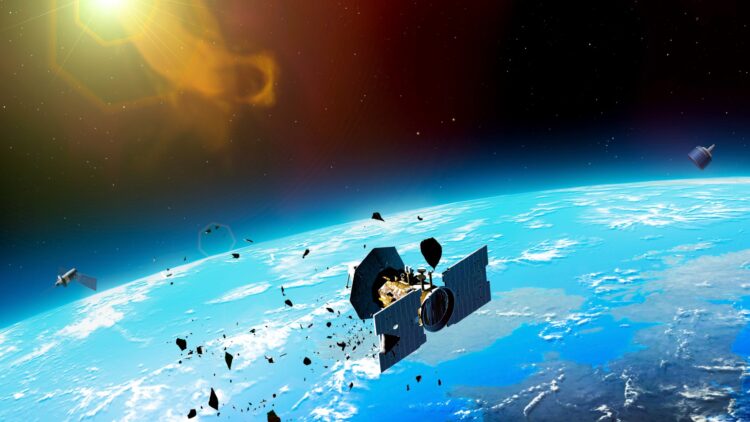
In early January, the U.S. Federal Aviation Administration (FAA) published a safety alert for airlines describing what it called an “invisible risk” in the sky because the growing number of rocket launches is creating new situations that airlines must consider when planning flights. The reason behind this alert was an incident in 2025 when a Starship rocket from SpaceX exploded during a test and left debris in the sky, forcing several commercial flights to change their routes to stay safe.
While the notice did not introduce new laws, airlines typically treat these alerts as important guidance for training and daily operations. So, let’s find out more about this.
What happened with the SpaceX rocket
What started the alert was the test flight that ended in a catastrophic failure. The rocket broke apart over parts of the Caribbean, creating a debris field that remained in the sky for nearly an hour. During that time, air traffic controllers slowed or diverted aircraft traveling through the area.
According to FAA documents, three commercial flights with about 450 passengers had to maneuver around the potential risk zone. Among those flights were a JetBlue service to San Juan and a transatlantic flight operated by Iberia.
SpaceX stated that no aircraft was really at risk and the airlines said their planes avoided the most dangerous parts of the area. However, the FAA itself described the situation as a ‘’potential extreme safety risk,’’ showing how one failed launch can quickly affect busy airspace.
What the FAA exactly says about the alert
The alert is known as SAFO 26001. These types of documents don’t create new mandatory rules, but airlines tend to take them very seriously and use them to train their staff and improve procedures.
The alert recommends companies to include rocket activity in preflight planning and daily risk management because space launches can suffer catastrophic failures that create debris fields in the sky.
In theory, this means that airlines may need to consider launches when planning routes, preparing crews, or deciding whether to delay or reroute flights. The goal is to ensure that aviation remains safe as space activity continues to increase.
More space launches
The main reason for this concern is the fast increment of space activity. According to FAA data, licensed commercial space operations went from only 14 launches in 2015 to 148 launches in the 2024 fiscal year. SpaceX was behind more than 80% of those launches.
It’s expected that launches and reentries could be between 259 and 566 by 2034. With more rockets in operation, temporary no-fly zones may become more common. Aircraft may need to reroute at the last minute or burn extra fuel while avoiding potential hazard areas.
For travelers, this could appear as longer flight paths, holding patterns in the air, or delays caused by safety precautions related to rocket launches.
When space debris also concerns scientists
Some scientific research studied the environmental effects of rockets and satellites. For example, studies led by the NOAA and university teams have found that black carbon released by rocket exhaust can accumulate in the stratosphere. There, it may warm the air more efficiently than pollution released closer to Earth’s surface.
What’s more, measurements of particles in the atmosphere show that around 10% of the larger aerosol droplets now contain aluminum and other metals consistent with satellites and rocket components. A related study estimated that satellites burning up during reentry in 2022 increased aluminum levels in parts of the upper atmosphere by nearly 30% above natural levels.
A recent NASA assessment concluded that launch and reentry emissions already affect every layer of the atmosphere and pointed out that the amount of material coming from spacecraft and debris has been doubling roughly every three years, partly due to mega-constellations and frequent heavy-rocket test flights such as Starship.
So…
So what does all of this mean for you as a traveler watching your flight time on the airport screen? In most cases, it simply means that airlines are adapting to a new reality where rockets and airplanes share the same skies.
However, you might experience longer routes or occasional delays, but these measures exist to maintain safety, not because aviation has suddenly become dangerous.