
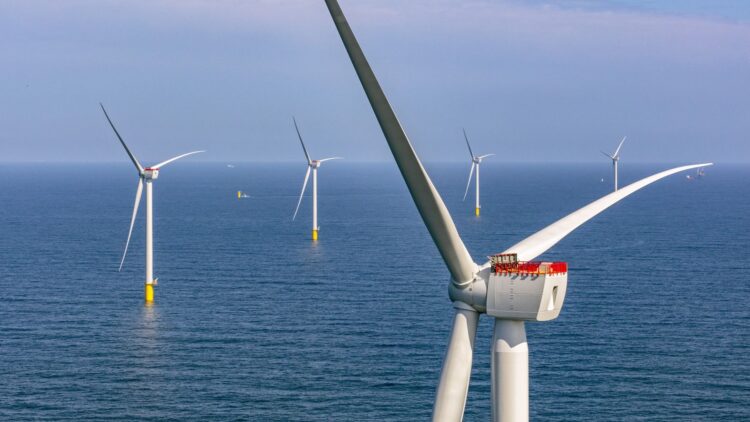
If I asked you to picture a wind turbine, would you immediately imagine big large structures turning in the wind to produce clean electricity? We normally focus on what happens above the water, but today we are going to talk about what is happening far from the coast, deep under the ocean, somewhere most people have never seen. So, let’s learn more about this place, shall we?
A place never meant for living
For decades, an area of the sea existed because it was deep, stable, and far from land. So, everything built there was designed to resist waves, currents, and time. Basically, the seabed was seen as a neutral surface.
There were no shelters, no rough surfaces, and no variation in shape. Without places to hide or attach to, marine life had no reason to stay. What’s more, water moved quickly, carrying nutrients away instead of letting them settle.
Since this was the idea from the beginning, this lack of life was considered normal and unavoidable for many years.
New shapes changing the rules
With the passage of time, new structures started to appear in the seabed. They were big, solid, and carefully built to support offshore wind turbines and survive harsh conditions.
However, their shape was key to changing the rules. These structures included openings, rough textures, and interior spaces. Instead of pushing water away, they slowed it down. Also, calm areas formed around them, creating spaces where things could settle.
So, without intending to, these structures changed the underwater rules because where there had once been emptiness, there was now form.
Nature when conditions change
Nature acts on its own and when surfaces appear and water movement becomes gentler, life arrives naturally. This is how it works:
Small organisms are the first to settle, they attach themselves to the new surfaces and begin to grow. Over time, larger species follow: fish start using the spaces for shelter, and shellfish attach and remain. So, slowly, sediments become more stable and the surrounding water improves.
In the end, a place that was once silent begins to show movement again, layers of life start to form where there had been none before. This process does not happen suddenly, but step by step.
Offshore wind turbines and life beneath the sea
All of this is happening beneath offshore wind turbines in the Dutch North Sea. The project is called OranjeWind and is developed by RWE and TotalEnergies.
Underneath the turbines are structures known as Reef Cubes, which are placed around the turbine foundations. Their role is not only to support the turbines but also to transform the surrounding seabed into a habitat.
Reef Cubes create shelter, texture, and variation. They turn a flat seabed into a place where marine life can settle and grow. As a result, offshore wind turbines are not only producing renewable energy above the water but also supporting life below it.
A quiet transformation beneath the turbines
What makes this change remarkable is how quietly it happens, the process unfolds slowly, over months and years. What scientists do is that they monitor these areas using cameras, sensors, and repeated dives. Over time, they observe increases in species numbers and more complex interactions between organisms.
The same conclusion appears again and again: structure matters. When there is shelter and variation, life responds, which challenges the old idea that offshore infrastructure must remain separate from nature.
Clean energy starts doing something else
Above the waves, the turbines do what they were designed to do: generate renewable electricity. Below the surface, they are doing something unexpected: fish, oysters, and other marine species are beginning to return. So, what started as a clean energy project is now quietly supporting marine recovery.
In the North Sea, renewable energy is no longer only about reducing emissions. It is also showing that, with the right design, clean energy can help life return at the same time.
So…
The transformation happening in the Dutch North Sea reminds us that progress often happens step by step, over time, and out of sight.