
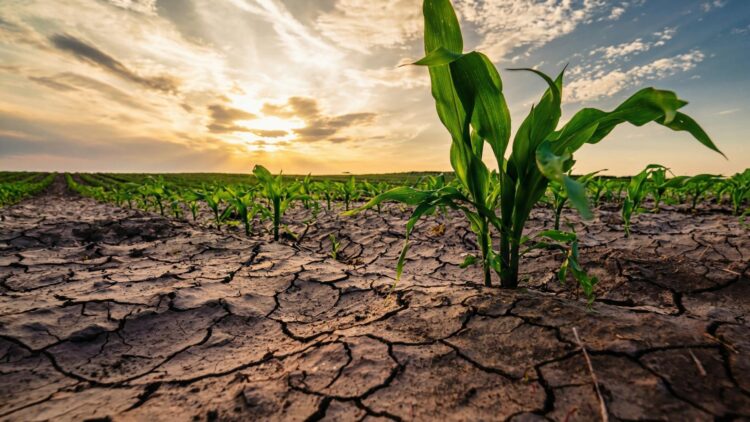
Humanity is currently consuming such vast amounts of fresh water while dealing with climate change that we have crossed into a state of water bankruptcy, reaching a point where many places simply cannot recover from constant shortages anymore.
Around 4 billion people—close to half the world’s population—deal with extreme scarcity for at least a month every year, lacking the water they need to get by. Even more people are watching the fallout of these deficits unfold, from empty lakes and sinking ground to dying crops, strict rationing, and a spike in wildfires and dust storms in arid zones.
A very drama-queen (but accurate) metaphor about water
The indicators of this insolvency are visible everywhere, from Tehran, where ongoing droughts and excessive draining have emptied the dams the city depends on and stoked political anger, to the United States, where the need for water has surpassed the Colorado River‘s flow, endangering a key resource for farms and tap water in seven states.
The term water bankruptcy isn’t merely a figure of speech for running low on resources. It represents a long-term illness that sets in when an area drains more than nature can put back, damaging the wetlands and underground pools that store and clean that water to the point where fixing them is nearly impossible.
The United Nations University Institute for Water, Environment and Health recently published findings showing that the planet has moved past the stage of fleeting emergencies. Numerous water cycles have lost the ability to recover to their previous states. These environments have essentially broken down, leaving UN pencil pushers in a state of insolvency.
Insolvency [Antiviral] Spiral
Here is how water insolvency would potentially work out in the real world—according to the UN. When you go broke financially, the early red flags usually seem fixable, like missing a payment, taking out a loan, or pawning a few items you wanted to hold onto. Eventually, the situation spins out of control. Running out of water follows a comparable pattern.
In the beginning, we just pump a bit of extra water from the ground when it hasn’t rained enough. We install stronger machinery and dig further down. We pipe supplies from one river valley to the next. We dry out marshes and force streams into straight lines to open up land for agriculture and urban growth. Yes, this is a book example of The Tragedy of the Commons.
Soon enough, the invisible consequences appear. Bodies of water get smaller every single year. We have to drill further down to find anything to drink. Streams that used to run all the time now only exist during certain months. Seawater begins seeping into freshwater reserves near the ocean. The earth literally begins to collapse under our feet.
When the Earth Gives Way
That final symptom, sinking land, tends to catch people off guard. Yet, it is a classic trademark of water insolvency. When we pump too much liquid from the earth, the underground layers that hold water like a sponge often give way. In Mexico City, the ground is dropping roughly 10 inches annually. After those tiny pockets get crushed, you can’t just fill them back up again.
The Global Water Bankruptcy report, released on January 20, 2026, records exactly how common this situation is getting. Pulling water from deep underground has caused the earth to sink significantly across more than 2.3 million square miles, affecting cities that house nearly 2 billion people. Jakarta, Bangkok, and Ho Chi Minh City stand out as some of the most famous examples in Asia.
Agriculture at Risk on a Global Scale
Farming consumes more water than any other sector, accounting for roughly 70% of all freshwater withdrawals. Once an area becomes insolvent, growing crops gets much harder and significantly more expensive. Growers go out of business, conflict brews, and national security often takes a hit. Around 3 billion people and over half the world’s food supply rely on regions where stored water is already shrinking or unreliable. Over 650,000 square miles of irrigated fields are dealing with intense or extreme water stress.