
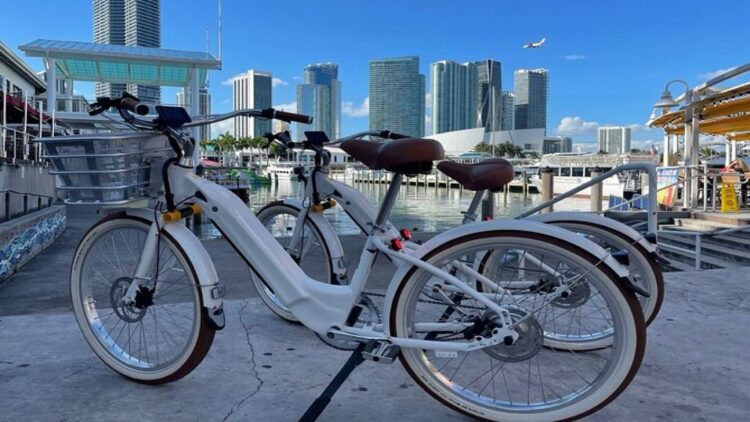
There are twists and turns coming to electric bicycle regulations in Florida. Two bills in the state propose changes to the regulations governing these types of electric bikes. Among other provisions, a license could become mandatory to operate certain electric bicycles. If the regulations are approved, they would establish specific conditions for the use of electric bicycles and penalties for non-compliance. Specifically, we are referring to Florida’s bills HB 243 and SB 382 regarding electric bicycles.
The new provisions establish a formal speed limit beyond which a vehicle is no longer considered an electric bicycle
The fact is that both bills propose virtually identical terms for the regulations on e-bikes in the state governed by Ron DeSantis. According to the texts of HB 243 and SB 382, the definition of an “electric motorcycle” is established as any vehicle with a motor of 750 watts or more capable of exceeding 28 miles per hour (45 kilometers per hour). And indeed, according to data, electric bicycles have been steadily gaining popularity, representing 10% of total bicycle sales in the United States between May 2017 and May 2018. According to local media, with this growing popularity, Florida’s laws are driving not only the industry and its popularity but also many state and federal laws. Therefore, the new provisions establish a formal speed limit beyond which a vehicle is no longer considered an electric bicycle.
It is prohibited to alter or manipulate an electric bicycle to change its assisted speed capacity or motor engagement
On the other hand, it is also established that all electric bicycles in Florida must have a visible label specifying their classification number, maximum assisted speed, and motor wattage. Prior to these regulations, House Bill 971 included electric bicycles in the legal definition of a bicycle as a “motorized bicycle propelled by a combination of human power and an auxiliary electric motor capable of propelling the vehicle at a speed of no more than 20 miles per hour on level ground that any person can ride,” and they were generally granted the same rights and obligations as regular bicycles. Therefore, with the approval of the new regulation, it is prohibited to alter or manipulate an electric bicycle to change its assisted speed capacity or motor engagement. This is crucial because bicycles travel on the same roads and sidewalks as vehicles and pedestrians. In other words, depending on the speed adjustment, misuse can have serious consequences in the event of an accident, especially if proper protective gear is not worn.
With the new amendments, violations carry fines of US$100 for a first offense and US$250 for repeat offenses
It is also important to remember that any other type of modification requires a corresponding label change. As a reminder, among the recent amendments, the passage of HB 971 led to the creation and rewriting of statutes to address electric bicycles. By removing “motorized bicycles” from the legal definition of a bicycle in section 316.003(4) of the Florida Statutes, the Legislature created a new subsection (22) that addresses electric bicycles. It also completely eliminated the prohibition against anyone under the age of 16 riding or operating a motorized or electric bicycle. Now, with the new amendments, violations carry fines of US$100 for a first offense and US$250 for repeat offenses.
And that’s not all. The law imposes restrictions on those under 16, who are prohibited from operating e-bikes with electric motors of 750 watts or more. E-bike riders on shared paths not adjacent to a road must yield to pedestrians and sound a horn when overtaking. Finally, as mentioned above, a license may become mandatory for operating certain vehicles of this type, especially if their speed is deemed highly dangerous for both the rider and other city residents. It is recommended to consult official sources for complete details.