
Humans have come up with a lot of innovations in the last hundred years or so. We figured out how to fly planes, constructed massive machinery, found cures for sicknesses, and created computers, the web, and smartphones. However, we have also done plenty of damage along the way, fighting numerous battles—including two global conflicts—and more recently, changing the climate through our own actions. Now, the famous scientist Stephen Hawking believes we only have a century remaining before the end arrives, meaning we must escape this planet well before that happens.
Hawking has made grim forecasts like this before. Lately, he cautioned that advanced AI might wipe out the human race and that reaching out to aliens could turn into a disaster for us. Back in 2016, he stated that we had a millennium to get off the planet. He has since slashed that timeline to just a century, which makes you ask yourself if the last half-year was really that terrible. Things must have looked pretty grim for him to suddenly remove 900 years from our countdown.
Why should humankind go into space?
Why should we spend so much time and cash just to bring back some stones from the Moon? Surely there are more urgent problems to solve right here at home. Before passing, Hawkings made sure to express his opinion on this.
It is actually quite similar to the situation in Europe prior to 1492. Back then, folks probably claimed that sending Columbus on a fool’s errand was a waste of resources. However, finding the Americas changed the Old World forever. At the very least, we wouldn’t be eating Big Macs or KFC today without it.
Expanding into the cosmos will have an even bigger impact. It is going to totally alter humanity’s path and might even decide if we survive at all. While it won’t fix our current issues on Earth right away, it will offer a fresh viewpoint and encourage us to look outward instead of just focusing on ourselves. Ideally, it will bring us together to tackle a shared goal.
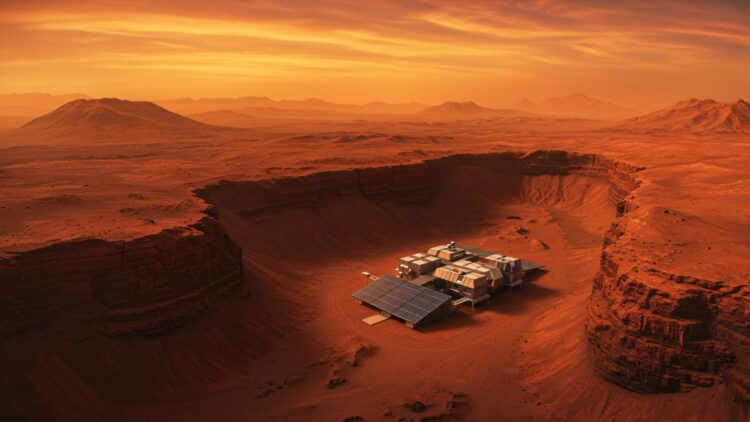
This is a long-game plan, spanning centuries or even millennia. We might be able to set up a Moon base in three decades, get to Mars in five, and check out the moons of distant planets within two centuries. When I say “get to,” I mean sending actual people, not just machines. We have already driven robots around Mars and dropped a lander on Saturn’s moon Titan, but if we care about our species’ future, we need to make the trip in person.
Where should we make our first base outside Earth?
Is it actually possible for us to live away from here for a long time? Our time on the International Space Station proves that humans can survive away from Earth for months at a stretch. But zero gravity brings some nasty physical side effects, like bone loss, and causes practical headaches with things like liquids.
Because of this, any permanent human base really needs to be situated on a moon or a planet. Digging underground would provide insulation against temperature swings while offering protection from meteors and cosmic rays. That local environment could also supply the raw materials necessary for an off-world community to support itself without relying on Earth.
Where in the solar system could we actually build a colony? The Moon is the most obvious choice. It is nearby and fairly simple to get to. We have already landed there and even driven a vehicle across the surface. Then again, the Moon is small and lacks the atmosphere or magnetic field needed to block solar radiation the way Earth does. Liquid water doesn’t exist there, though there might be ice tucked away in the craters at the poles.
A settlement there could harvest that for oxygen, while getting its power from nuclear sources or solar panels. The Moon could serve as a jumping-off point for exploring the rest of the solar system.”