
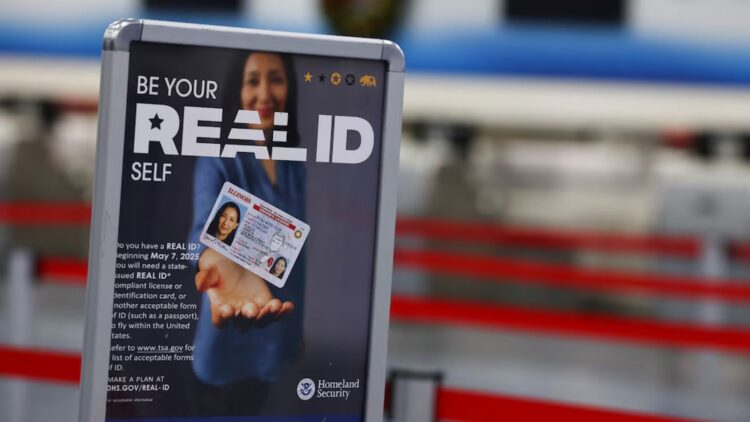
Over the past year, the United States has undergone a series of changes across various sectors that directly impact its citizens. One such change concerns the documentation accepted at airports for domestic flights. This measure is part of a federal security initiative aimed at preventing fraud and standardizing access controls at airport terminals nationwide, a measure that went into effect last year. While identification is mandatory, the Transportation Security Administration (TSA) accepts some expired documents. The TSA website lists the documents that can be presented with an expiration date of up to two years.
The U.S. government also accepts digital IDs, such as Apple ID, Clear ID, and Google Pass ID
Currently, a document compliant with the federal standard known as REAL ID is required for domestic flights. Specifically, starting May 7, 2025, all travelers over the age of 18 flying within the United States must comply with these new identification requirements established by the Transportation Security Administration. It’s important to remember that in this day and age, the U.S. government also accepts digital IDs, such as Apple ID, Clear ID, and Google Pass ID.
As official sources emphasize, the main motivation for implementing this update is security
Therefore, citizens can rest assured that if they forget their ID at home, they can travel without issue if it’s registered on their smartphones using the aforementioned apps. In any case, and if they have any doubts, citizens are advised to consult official sources to avoid any last-minute surprises.
The complete list of the valid documents
As mentioned above, there is a list of identification documents that are valid for travel even if they have expired for up to two years. The complete list of these documents can be found on the TSA website, and we will now list them below:
- State-Issued Enhanced Driver’s License
- U.S. Passport
- U.S. Passport Card
- DHS Trusted Traveler Card
- U.S. Department of Defense ID, including IDs issued to dependents
- Permanent Resident Card
- Border Crossing Card
- Acceptable photo ID issued by a federally recognized tribal/native nation
- PIV HSPD-12 Card
- Foreign Government-Issued Passport
- Canadian Provincial Driver’s License or Native and Northern Affairs Canada Card
- Transportation Worker ID Card
- U.S. Citizenship and Immigration Services Employment Authorization Card (I-766)
- U.S. Merchant Mariner ID Card
- Veterans Health Identification Card (VHIC)
Therefore, following the laws as explained, citizens should have no problem traveling through the country’s airports. As official sources emphasize, the main motivation for implementing this update is security. The regulation originates from the REAL ID Act of 2005, enacted to improve identity verification and combat the use of fraudulent documents at federally controlled access points.
The Department of Homeland Security confirmed that the requirement will be mandatory starting in 2025 at all U.S. airports
From its enactment to its implementation, various processes have taken place, but now the focus is on the application of anti-counterfeiting technology, the prevention of internal fraud, and the use of documentary evidence and records to verify the identity of those requesting the document. The Department of Homeland Security confirmed that the requirement will be mandatory starting in 2025 at all U.S. airports, after several postponements of its implementation.
Therefore, before traveling to visit family, for work, or on vacation, it is essential to verify that your identification document complies with REAL ID standards. The Transportation Security Administration (TSA) maintains an official list of acceptable credentials on its website, which are required for travel.